Showing posts with label review. Show all posts

Thursday, July 22, 2021

Magical Murder Mansion Review

Disclaimer

- In the interest of full disclosure I bought this with my own funds. Paid 6.99US$ in October 2019 for the PDF version of this adventure.
- Nobody is paying for this review. All of the opinions you see are my own.
- Nobody is approving or reading this post before it goes up.
- I have no relationship with any of the authors of this product.
- Also, check my review standards for more context.

This thing contains spoilers (duh..), so if you're sensitive to them, stop reading!
 

    Enter the Magical Murder Mansion

    Let's take a closer look at Magical Murder Mansion, "A Challenging Funhouse Dungeon". Writing by Skerples, with fitting illustrations by Frenden, editing by Shane Liebling, and layout by David Shugars.

    My take here serves as both a review of the module, and the broad impressions of running the adventure over the span of two different groups and 15 gaming sessions. With the first group we ran 3 sessions before the game fizzled out, using Knave. The second group (The Calaveras) however, managed to clear the mansion in a whopping 12 sessions, with lots of shenanigans and fun, using Macchiato Monsters. Despite their extreme caution and cleverness, yeah, MMM is rather unforgiving:

    our body count: 3 PCs and 6 retainers

    Product Details Quality

    The PDF comes with bookmarks, and is easy to print and annotate, since it is completely black and white. This is a core strength of all of Skerples' products, and one I greatly appreciate. Font is big and easy to read, and there is plenty of space in the margins for my own notes and scribbling.
     
    Art is a  mix of Frenden's pieces, mostly monsters, and selected public domain works. The cartoon-like quality of the former is fitting for such a tonally light adventure. My only minor criticism is I would have appreciated more of it! I get that art is expensive, but more dynamic pieces, like the one on page 12, would've been a nice addition.
     
    About the map. It's utilitarian and annotated. Most room names are self-explanatory. From the inferred reading I learned (assumed?) that a square = 10 ft, but a scale on the provided maps would have been welcomed. We get map snippets of the relevant section accompanying the room descriptions. Nice!

    Skerples encourages us to read from cover to cover, and take copious notes. And thus that's what I did. Layout is clear and functional, monsters and magic items get some italics, and cross-referenced room numbers are bolded. But, I feel descriptions could get wordy, I would've appreciated key elements been bolded or underlined, to draw attention when skimming at the actual game. Or more generous bullet point use. Is this lack a decision to hand-force the referee read the module beforehand, perhaps?
    my mad method: traps in red, monsters in green marker, treasure underlined green, monster HD on margin, purple marker things to interact with

    About the Adventure

    This is a funhouse dungeon, citing inspiration in classics like Tomb of Horrors, Tegel, or White Plume Mountain. I've played the former, and ran the latter. However, MMM does have a distinct feature separating it from those touchstones. It tries to make sense and justify its bizarre attractions.
     
    There is a two page introduction, covering important bases: what this is, who is it for, adventure hooks, and also important details like unorthodox ways to enter the dungeon (since it's a mansion, there are many!). I wish other adventures would take notes of a nice introduction like this one. One thing I'm missing is an overview of the treasure and magic items, something I've complained about in the past, and where Necrotic Gnome took note. This is a minor quibble, and in fairness a ballpark to treasure in the dungeon is given, as well as assumed HP and damage levels for PCs. The introduction is well above most.
     
    The adventure proper is a hefty undertaking for any group, falling into the kilodungeon category in terms of size. 90 rooms of different sizes and content densities, and on the heavy side when it comes to interactivity.

    Careful and finessed danger telegraphing is demanded from the referee in this one. There are enough deadly traps, levers to pull, fountains to drink from, and statues/memorabilia to interact with, where failing to do so can result in dangerous or fatal outcomes. This is a must in MMM, given the sheer amount of such content. Players hate if things are capricious and absolutely arbitrary. Luckily there is a primer on how to run traps in an OSR game at the end of the product (akin to something like Quick Primer by Matt Finch).
     
    But on the flip side there are plenty of chances for the players to learn how the mansion operates, and what Mr. Nibsley favors. Carpets should be carefully poked, lifted and inspected. Ghosts are best kept at a fair distance. Also, there are plenty of chances to turn deadly traps (and in general the mansion) against its own denizens.

    It has enough absurd goodies in terms of magic items, laser guns, an accelerator, etc. to make it tougher to integrate into an existing campaign or running game, in case your players walk out with such treasure. There is good design here, several of the most bizarre and explosive curios are in the upper level. An option would be to replace that level with just room 90, also shortening the adventure after getting the four keys.
     

    Our Run

    Here I for the most part focus on the group that did the complete run, using Macchiato Monsters.
     
    As mentioned above, we ran for 12 gaming sessions. Players were ultimately successful (sans the overgrown graveyard), and secured the ultimate spellbook objective of MMM. For our slowness I blame both me and my players for taking our sweet sweet time to explore every corner of the MMM. They really left almost no room explored and interacted with. Also, our sessions are on the short side, I would say between 2-2.5 hours of actual game time.
    screenshot from Roll20; few rooms were left untouched

    A lot happened in our run. So for brevity's sake I'll condense some highlights here (in no order):

    • A sneaky doppelgänger infiltrated party, after the PCs returned to town for supplies leaving a dead retainer behind in the mansion. She's alive! (yeah...). We later had both the false retainer and a PC killed by reading a false tome with explosive runes. Self immolation; first and only TPK.
    • After blowing the blue whistle, unaware of what it would unleash, they summoned a blue behemoth. Causing great havoc amongst the veggie-mites, enough to distract them and steal their key. A PC had to play a bit the toreador role, though.
    • Sampling weapons of the futuristic armory (85: Weapon Alcove), one by one, to fend off against three not-so-hidden mimics. The rat-in-a-stick-shooting-laser-beams-through-eyes staff was a highlight for the players!
    • They convinced a complacent kiln-fired-zombie-maid to take an acid shower.
    • They used the garbage disposal sphere of annihilation hole to get rid off probably the biggest threat of the dungeon, the Callowfex, by meticulous and slow herding. This is after a previous PC died in there by the doppelgänger (see first point) pulling the lever at a capricious moment.
    • Deducing with careful note-taking, and thanks to careful reading of the 47: Record Room who the real Esmeralda is (19: Prison).
    • Quickly skadoodling out of the mole dragon's den with a pissed off and rampaging mole by "sacrificing" Sophie the thief hireling. All of this with pissed-off teeth eating feys on their heels.

    You probably can detect a pattern here. There were a lot of dangerous situations, and my players had great success in turning the mansion's traps against some of the most dangerous monsters. This emergent play is one of my favorite parts of the OSR, hands down.

    There were also a good number of "nope" situations. Where the players hesitated, decided to circle back to another section of the mansion, etc. They suspected furniture or another room feature and immediately closed the door, didn't pull the lever, etc. This of course got penalized with more random encounters, draining HP, abilities and so on. Their choice. But we had enough of these instances where I do wonder if the dungeon was too "passive". Or setting a timer to the adventure would have worked better: the manor will self-destruct in two days, the local authorities will seize the contents themselves, etc.

    To spice things up, and because I hoped to continue the game after MMM, I introduced a rival adventuring party. Against my expectations, the PCs ended up befriending them and joining forces to clear the upper workshop portion of the adventure.

    Growing Points

    A very few rooms could use some massaging. Nothing deal-breaking. Just careful reading and changing beforehand. For instance
    • 47, Record Room: this meta game gimmick has the trouble of voiding the players of useful information. Latest visitors are not listed, and I feel that could have helped the referee (for instance Esmeralda Spugs in room 19). In the first game, the group felt deflated. In the second I added that and it was a success.
    • 54, Art Gallery: there is a ton of information to hand out when describing this room and the paintings. The lack of doors to nearby rooms didn't help us resolve it.

    Non-talking monsters. There are perhaps too many, clearly outweighing those players can talk and negotiate with. My group had to deal with a considerable amount mimics, giant spiders and paper snakes. Perhaps granting a bigger role to the doppelgängers and the ghosts could have helped here? Making them proper factions? Not sure.

    Also, the aforementioned point of bolding or underlining of important room keywords to make the descriptions easier to parse during play is another quibble of mine.

    ---

    Conclusion

    This concludes the review.

    The adventure has a clear goal in what space it's trying to fill, and it delivers in spades. Increased verisimilitude compared to other funhouse dungeons was something I liked and worked well, and the main adventure structure (with the 4 keys) was well received by my players. Deadly traps and situations are not too capricious or random; clever players will be rewarded. The whole adventure evokes a Saturday morning cartoon feel.

    Plugging MMM into an existing campaign is likely tough and not advisable (too many crippling traps, or wonky magic items). We didn't do it. Rather, it should be used as a singular affair for experienced players seeking some challenge. Removing the second floor and placing the spellbook directly after the 4 keys could make it a shorter run, perhaps for a single sitting? This is pure speculation on my part.

    The PDF version is more than enough, ideal for print & play, there's really no need for a physical version. Price to content ratio is a steal, and it belongs to any OSR collection as a masterclass in the space it's trying to fill: funhouse dungeons. Very much recommended.

    Monday, April 26, 2021

    Five Inspirations, Issue 1

    In no particular order, and with no cohesive fabric between them, here go five sources that have I have recently consumed, and provided great inspiration.

    As my disclaimer usually goes, these are things that I personally like, paid with my own money, and nobody is pushing my way. Other than the sophisticated advertisement apparatus of the tech giants, of course.

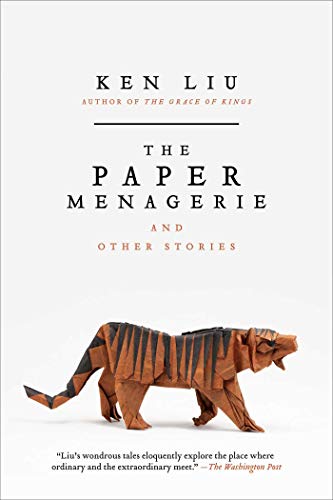
    1. The Paper Menagerie and Other Stories, by Ken Liu

    Just finished this book, and my mind has been blown.


    This book contained, by a wide margin, the best writing I've had the privilege to read in all of 2021. And possibly including 2020 as well. My reading habit is certainly not what it once was, so take that statement as you will.

    The collection of short stories is insightful, paced, and thought provoking. Evocative writing flows from the page. There is so much sentiment and soul embedded in every single sentence. Fantastical elements, science-fiction and alternate history are blended with gusto. Doesn't really matter.

    The titular "Paper Menagerie" story had me literally crying, its themes of migration, culture, and heritage strongly resonating.

    "Good Hunting" was adapted for the brilliant Netflix show "Love Death + Robots", and deserves high praise. Industrialization, and our land and culture losing its magic.

    "The Perfect Match" could change its entity to Facebook, Alphabet or Amazon, appear on a newspaper, and I would strongly believe it true.

    "The Literomancer" is a gorgeously saddening story on the magic of words and language.

    "The Regular" tells in 50 pages a credible and engaging neo detective story.

    I could go on and on. Stories range from great to brilliant. There are repeating themes, heritage, language, communication, history, industrialization fantasy and futurism.

    This book is a must read. Broadened my view and mindset. Pick it up, and thank me later.


    2. NOD magazine, by John Stater

    Ran into this series of zines in the OSR space, where John Stater has consistently been throwing together very complete material. Mainly centered around his land of NOD, they include robust hexcrawls for OD&D, with interesting flavor, including bestiaries and interspersed articles. They are a tour of the world in terms of flavor and influences. You have your pseudo-european setting (issues #4-#7), but also one based on african mythology, another with east asian roots, and even a tour of Hell!

    The PDF pricing is extremely fair for the amount and quality of the content. I would highlight issues #7 and #34 from the dozen or so I purchased thus far.

    In all likelihood one of these will form the basis of what we do in The Calaveras campaign. I'm thinking of issues #19-#21. After we rebooted our game with 1 less player, we should be done with Magical Murder Mansion in a bit (it's taking us a while, but we're getting there...).

    3. Watchmen, the 2019 TV mini-series

    Swinging in quality from episode to episode, and very derivative from the graphic novel, I still enjoyed the first six episodes of this mini-series. The last third is a bit of a hot mess, losing its grounded reality, and going into realms that made my eyes roll... I would have dropped it if it wasn't for Jeremy Irons' performance. The original Watchmen graphic novel was a favorite of mine, so take that as you want.

    The topics are ominous and worryingly prophetic, given its release was end of 2019. Before the mask reality. Before the BLM movement exploded.

    Other than the great portrayal by Irons, I felt the secondary characters also had strong performances.


    4. A series of Bloomberg Quicktakes

    My failure to latch to the Expanse hype train has not prevented me from enjoying and consuming more quality science-fiction than in recent years. Books, serials and movies. I ran into this series of videos with interesting cutting edge technologies. Interesting topics.


    5. James Bond Movies

    Slowly making my way through the Bond movies of old, with Connery and Roger Moore on display. Man, pacing in these movies was completely different experience back then. Cheeky, campy, and a good deal of relaxed fun. Sometimes my pandemic brain can only take this amount of complexity, and I'm ok with that.

    Sunday, February 7, 2021

    Ten People You Meet in the Undergarden, Zine Review

    This is my attempt at taking a look and reviewing the Zinequest 2 projects I backed.

    Disclaimer

    - In the interest of full disclosure I bought this with my own funds.
    - I was a backer on their Kickstarter campaign and paid 5 US$ for the PDF version of the product in February 2020.
    - Nobody is paying for this review. All of the opinions you see are my own.
    - Nobody is approving or reading this post before it goes up.
    - I have no relationship with any of the authors of this product.
     

    Overall feel

    Ten People You Meet in the Undergarden (TPYMITU from now on) is a 26 page-long zine (including front-, back cover, and notes from both autors), written and edited by Kari Aldrich and collaged/illustrated by Sam Mameli. The digital version is deceivingly arranged in spreads, which can mess up the page count. This Troika!-compatible volume has exactly what it says on the tin: 10 creatures you would meet in the Undergarden (reminiscent strokes of Alice in Wonderland, Narnia, and Gardens of Ynn), with collage art and extensive accompanying prose.
     

    Full disclosure here, I'm not really familiar with Troika!, only having skimmed the game that I got in a bundle some time ago. So not very familiar with the underlying game and community. It feels the Troika! creators are more artistic, pushing the boundaries of what constitutes a TTRPG. I'm a bit out of my depth here, but I'll approach the material with an open mind.

    TPYMITU is not affiliated with the Melsonian Arts Council.

    Reading the digital version for this review, I was listening to a bit of Rachmaninoff whilst enjoying a cold one.

    The Ten People

    "A bad day of fishing is better than a good day of work' CLICK DING!"

    There are 10 individuals presented here, with evocative collage art, and extensive descriptive prose. Reading them as short stories makes for the odd chuckle, and they seem taken straight out of (a less decadent and broken version of) Gardens of Ynn. One of my biggest criticisms in that work is the lack of things the players can talk to, so the Undergarden's denizens seem like an excellent fit on paper.
     
    In order of appearance, we get the following:
    • Anne Fredd, shrub knight of the church
    • Geralmine, a mushroom mercenary in the city of broken clocks
    • Effum Deffum, a clockwork angler by the pond
    • François, a bird thief in town
    • Marcot Egglet, a spider archer on the bridge
    • Mrs. Hedgemaze, a hedgemaze
    • Arry Coole, a spider farmer near the castle
    • Mr. Whiskers, a cat merchant on the road
    • Broos Greenshoe, a bug cleric in the castle
    • Hom Tinsel, an elven carpenter in the tower

    My favorites are probably François, Arry Coole, and Broos Greenshoe. But they all were interesting to read.

    Example spread for Arry Coole

    Prose is written in the second person (with some entries in third person instead). There are not really many situations that could be incorporated into a gaming table, at least not as is. No gaming material here. People from TPYMITU are inspiration, and give ideas to feed and ingrain into the referee's head. Some have merit, and could help me derive my own material for my games: a spider farmer that cares for their population making sure of their sustainable development, a sentient hedgemaze with powerful abilities, an book-rat of a bug that lets you into the castle's library by signing a ledger (you notice: previous entries only have an entrance date in them!). You get the picture.

    The implied setting of the Undergarden is vague at best, just strokes here and there. We know that Mr. Alpred is a skilled clockmaker. Bietemoupe is a town. There is a half-ruined tower that is undergoing reparation work. A protected manor. Etc etc. There is even a library in the Undergarden, making the potential crossover between Ynn and Stygian Library a reality for us to enjoy.

    Mien are useful words to understand the monster better, they help. To have a sense of these People's beefiness I quickly open the Troika! Numinous Edition and see that Dragons have Stamina 32, and Goblins 6. There is someone with Stamina 40 and 6 in TPYMITU, so a wide range. But gaming statistics hardly matter in this publication at all. They could've been removed, making perhaps a stronger zine.


    This concludes the review.
     
    I'm definitely out of my comfort zone with this one. There is almost no actionable material here, but some good food for referee thought. Reading the short stories was an interesting and picturesque 70 minutes, and the collage art was delightful at places. Might incorporate some of these into Ynn's encounter tables if I ever run that again.

    Glad I got to do these (belated) reviews to sit down and read material like this, which otherwise would sit in my digital-folder-of-shame for eternity.

    Thursday, February 4, 2021

    Hunters in Death, Zine Review

    This is my attempt at taking a look and reviewing the Zinequest 2 projects I backed.

    Disclaimer

    - In the interest of full disclosure I bought this with my own funds.
    - I was a backer on their Kickstarter campaign and paid 8 US$ for the print and PDF versions of the product in February 2020 (plus 4$ postage, to a total of 12US$).
    - Nobody is paying for this review. All of the opinions you see are my own.
    - Nobody is approving or reading this post before it goes up.
    - I have no relationship with any of the authors of this product.
     

    Overall feel

    Hunters in Death is a 34 page-long zine (including front-, back cover, and table of contents), written and mapped by Tim Shorts and illustrated by Jim Magnusson. It details a wilderness location infested with undead and other vermin (in the form of a verbose encounter table), includes a town with factions and personalities (Hounds Head), a barrow mound generator, and three fleshed out adventuring locations. This is written for Old School Essentials (aka B/X), and I like that this is spelled out. No playtesters are credited.
     
    Art is black and white, consistent throughout, sets the tone according to the written material, and there is enough of it to keep me engaged. Bringing Jim Magnusson into this project was a great choice.
     
    The PDF formatting and layout is well executed, clean, and easy to read, in two-column format. I'm missing the bolding of key words in certain paragraphs, which could aid when running the module to bring the key aspect to the referee's attention. This is a minor criticism, but valid.
     
    Production of the printed zine seems to have happened at the author's home printer, which adds to the flavor of an indie low-scale product. The digital version includes (annotated, referee-facing) maps included in the adventure. A nice touch for use in times where VTTs are king, or to print as an additional aid at the analogue table.

    Sandboxing through Komor Forest

    Hunters in Death is set in the author's home campaign world, the expansive Komor Forest. The meat of the sandbox material is split into three different areas, which I'll touch on in a second. (Un)Death, hunger, and crows dictate this setting's dressing, without falling into the over-saturated edgy grim corner.

    I would like to highlight the first pages of the publication, comprising Referee Notes & Organizations/Gods. Notes from the author are important and something I'd like to see more often. Minutae like currency standard, peculiarities for the setting, or factions and organizations are discussed here. Great! Saves me for going fishing into the adventure to reverse-engineer this content.

    Next we get the sketch to the hamlet of Hounds Head. The base of operations for the PCs, where they will have most amenities and services needed between adventures (equipment, smithy, sage, etc). Six adventure hooks set the springboard to adventure.


    So, back to the sandbox's contents:

    First, a 4d6 table of random encounters. That's a steep spread. Some encounters are unique, others generic goblins/bandits/skeletons. Luckily some of these more generic encounters include d4 variations, because nobody want to run into yet another generic goblin patrol... Common monsters, but with enough coherent situations to them.

    Second, a random barrow mound generator in the form of random tables to determine number of barrows, monsters (if any), and treasure (both mundane and magical). There is re-usability in mind here, since players are going to fall into several of these mounds as they adventure. Magic items make the most interesting content in this section, since they deviate from the lame +1 weapon into more interesting options for the players.

    Third, we get 3 more fleshed out adventure locations. An abandoned hunter's cabin, a temple (crows!), and Hunters Crossing, with a pair of killer foes. From those, the hunter's cabin reads like a creepy little locale that would keep most players biting their nails throughout, and would require critical problem-solving. The other two locations read to be serviceable, and I like that all three are tied to elements of the sandbox's random tables, or Hounds Head.

    None of the material above will blow your socks off. Komor Forest is a cohesive region where the expectations from a semi-serious D&D game will be met. Dressing and innovation to be purchased elsewhere.


    This concludes the review.
     
    During my first years at uni I ate an embarrassing amount of pasta with pesto. We're talking three to four times per week. It was cheap, easy to prep, filling, and had an ok taste to it. Luckily this habit didn't translate to bloat around my waste line.

    Hunters in Death feels like pasta with pesto. Serviceable, filling, fairly priced, no bloat. It won't flex your palate with exotic or refined flavor, for that look elsewhere. But it will do the job as a micro sandbox setting for B/X with a few interesting adventure locales that your players can explore. With this, the OSE SRD, dice, and a bunch of friends I'd have game for days.

    Thursday, January 28, 2021

    Sinister Red, Zine Review

    This is my attempt at taking a look and reviewing the Zinequest 2 projects I backed.

    Disclaimer

    - In the interest of full disclosure I bought this with my own funds.
    - I was a backer on their Kickstarter campaign and paid 5 US$ for the PDF version of the product in February 2020.
    - Nobody is paying for this review. All of the opinions you see are my own.
    - Nobody is approving or reading this post before it goes up.
    - I have no relationship with any of the authors of this product.

    Overall feel

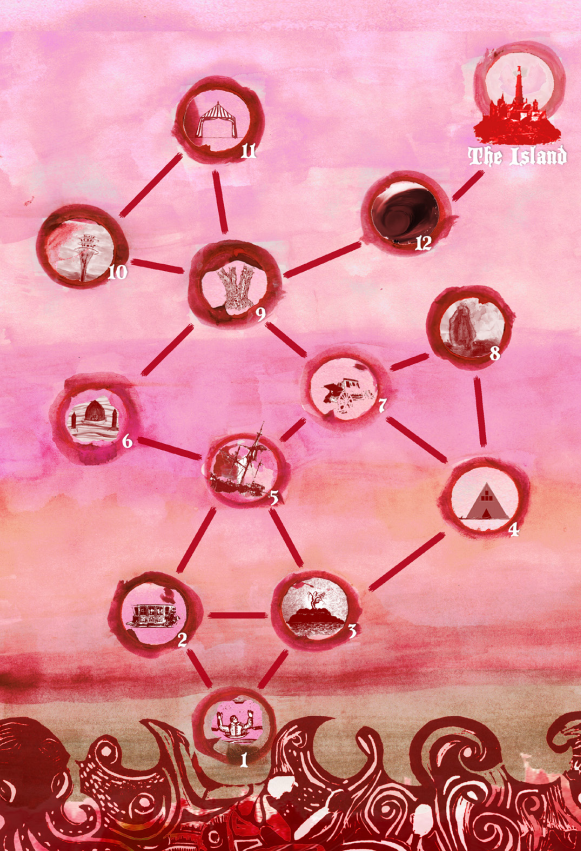
    Sinister Red is a 32 page-long zine (including title page and table of contents) written by Rudy Mangual and beautifully illustrated by Yvette Lopez. It details twelve locations in a pointcrawl, plus The Island, a more fleshed out locale spanning numerous pages. Playtesters are credited, which gives the hope that it was actually put to the table before release.
     
    The watercolor feel of the art is evocative and abundant (see below). Every single page has a piece on it! The abundant red color emphasizes the underlying themes and landscape of the adventure. It has an eclectic and collage structure to it, that fits the module's mood.


    Formatting and presentation are of my liking. Each of the (pointcrawl) locations has a one to two-sentence read aloud, followed with summarized bullet points. Then, more complex features, relevant items, creatures stat-blocks etc get detailed in the rest of the page. Bold and italic fonts are used to remark important or flavorful keywords, respectively.

    The PDF is decently cross-referenced with hyperlinks and page numbers to help navigation. Missing bookmarks, even with the project's brevity, seems like a missed opportunity. Omitting PDF layers will make it hard (and costly!) to print at home.
     

    The (pointcrawl) Adventure

    There are 12 points of interest, taking a single page each, and The Island, a final location with considerable detail (and eight island locations of its own).


    How do the PCs get to this literal sea of blood? There are a few hooks, but probably they are pooped from a portal. A demi-plane of fever dreaming, oozing crimson flavor, could do well for an adventure more elaborate than "goblins in a cave". There are vampires, but of the mutated and alien kind (high on blood!), rather than the gothic decadent nobility we are used to seeing.

    First points in the crawl are heavy on combat, as I feel all the foes presented are the kind not to be negotiated with. There is also little for the players to interact or experiment with. But at least they get a sense as to where they got, and can start drawing their own conclusions as to what is going on here. It is only when we get to the middle portion (locations 4 & 5) where more interesting NPCs start to flourish, presenting pointers, rumors, and quests.

    One piece of mild criticism I have is... What system is this written for? B/X? OD&D? It's nowhere to be found, but some assumptions are to be made by the referee reader to peruse this adventure. In the OSR space, everything is fairly compatible, but the devil is in the detail, e.g. treasure quantities assumed.

    Continuing, locations 6-9 seems also heavy on the encounter side, and even if the monsters could be negotiated with, and are unique, there is no tactical depth or again, interactivity, for the players to engage with.

    The Island, albeit again suffering from the overabundance of foes, presents more interesting spatial design, with players having to find ways to climb to the upper half of it, the Ruined City, and ultimately the palace. I wish some NPCs (for instance Hernan Corteso) would have more fleshed out wants and goals, as they could make good allies to the PCs if a deal is struck towards a common goal. This is implied, but not clearly spelled out. At least the Vampire Queen is given more details (but no stats, or at least a HD range to assess her prowess, so we assume her a goddess).

    Now the tower, even though extremely linear by design (bad!) has more interesting and fleshed out encounters, that I think do work well on paper, and could translate to some puzzled players. I like them better. The final encounter, The Stand Off, is imaginative enough and has interesting outcomes laid out, which could wreck the campaign or bring it back to a more traditional plane.

    End sprinkling

    The last three pages of the zine have a few helpful tools (in the form of tables) for the referee. NPCs, Random Encounters, and a d66 table of "I Search the Body/Room/Rubble" type. Short and punchy, I like these. Note that most monsters are cross-referenced for gaming statistics to other pages of the pointcrawl proper, but it will result in more flipping back and forth. And some of the items are powerful and dependent on the group (gun, etc), but imaginative and meaningful, as should be in an OSR adventure.


    This concludes the review.
     
    Interactivity is hurting here, as I believe the pointcrawl nature does. Laying the adventure elements differently, removing many of the spelled out encounters, or at least making them more interesting for the players and meaningful would go a long way. The Island, and more particularly The Tower are much more to my liking.
     
    Sinister Red is good for a zine coming out of nowhere (at least for me, I knew nothing about the authors involved going in). If not to use wholesale in a planescape or high gonzo campaign (with some work to fix the interactivity), then as a visual treat and to pilfer for ideas and visual flavor. A nice surprise from my Zinequest 2 purchases.

    Tuesday, September 22, 2020

    They Cried Monster, Zine Review

    This is my attempt at taking a look and reviewing the Zinequest 2 projects I backed.
    See some disclaimers at the end of this post.

    Overall feel

    They Cried Monster is a 24 page-long zine, laid out in front and back cover as singles, and 11 spreads. Two PDF variants are provided: single pages and spreads. It is black and white, with enough black ink so that printing from home could be tough. The PDF has no bookmarking or layers.
     
    One of the biggest appeals for me to get this zine was the artwork and aesthetic, and I knew there would be monsters to mine for my campaigns. For me it sits in the category to "pick a small number of neat elements for my own game", and not something I want to apply from start to finish in a game.
     
    Have a look at the Kickstarter campaign to get a feel of what this is. This is the 3rd zine I review where Charles Ferguson-Avery was involved. I own Into the Wyrd and Wild, which I consider a helpful toolkit for running forest-wilderness adventures. This zine touches a lot of the same notes as that supplement did. If you liked Wyrd and Wild, chances are you'll like this. The Tyrant Centipede (one of the monsters) has concept and writing credit from Jesse Martin.

    The cover perfectly summarizes the contents of They Cried Monster. There are some house rules for Hunters, which is a more heroic adventurer than we are used to see in a standard OSR game. This sits between some rules and tables for generating Settlements (a place to gather rumors and meet key NPCs), and a Bestiary with six creatures in the mid-level of play (given their HD range). I think this is a great cover, conveying the contents.

    The first page of arguable content is a Using this Zine background section. References and influences are cited (The Witcher, Hellboy, Mushishi). Claims to be rules system agnostic (citing some recommendations like Knave, B/X, DCC, Troika!, 5e, etc), and frankly in my limited experience that's harder to get right than choosing a system and even loosely sticking to it.

    Hunter Rules

    There are essentially two proposed house rules, to make play more heroic. It will still require a proper ruleset to play with, since here we only get some dressing and optional rules to tack onto the game of choice. I think they would work better on some systems than others (Black Hack, B/X and Knave vs DCC Troika! or 5e).

    It proposes slots (like Knave), and quantum equipment for mundane items (which ones count as unique? it's not clarified). Monster hunting takes some distance from the bean-counting and planning involved by equipment purchases. This is a bit conflicting for me, but I know it can produce great results at the table, depending on the group's preferences.

    Then, it encourages games where the Hunter is adventuring alone. Or as the only PC, this could work well on a one player one referee situation. Collateral damage helps for that. The table of 10 Disciplines, essentially small powers/knacks, reinforces that. Descriptions evoke Witcher vibes, a big influence throughout the publication.
     

    On Settlements

    There are three pages on building settlement settings. A locale currently accosted by the monster, where the Hunters can help solve the pesky problem. The best part is the two random tables for prominent NPC generation, as well as community details (wealth, quirk, etc.). These provide enough to frame the skeleton of such a community. A list of names (both for people and places) would have been appreciated. We get a sample community with three such personalities, ready to be used.

    A few further criticisms though. First, the population type numbers make no sense, at all. A city can at most have 150 inhabitants? Second, you're meant to track the attitude of these prominent NPCs towards the Hunter/adventuring party. But the way to do so is only mentioned in extremely broad strokes. It would require a lot of work to make this idea actionable at the table, into an actual, interesting system. Similarly, the mob mentality, while making a lot of sense and providing some guidelines, seems a bit coarse and generalist. Lastly, there is a 2d6 table for Nightly Events, but there are entries for results above 12, and I have no clue what modifiers apply to arrive to that number.

    The Monsters

    The meat and potatoes of the publication. We get six monsters, each described in a spread, fully illustrated. Fairly system neutral, with things like armor as chain, I wish we had damage also statted that way (armor as longsword, as polearm, etc.), but that's a minor nitpick. The gold values as reward seem very low for a gold for XP system like B/X, and it would be nice to know what system they're intended for. I would just adjust it with some amount per HD of the monster.
    Tyrant Centipede, one of the monsters
    Tyrant Centipede, one of the monsters


    On top of the stats, we get a written description to accompany the visuals, and habits and weaknesses. These are good tools to feed to the players in rumor tables, or as prized information to defeat the foe. I like this. Escalating the conflict with the monster, which should be something spanning one or multiple session, is done in an elegant manner, providing a flowchart with 6 entries per monster, per stage. This provides context when the Hunter arrives to a new settlement of what has transpired already with the monster, before they arrived, and why the community is bothered by the creature.

    The six creatures are: Bronzebeak Gryphon, Cindermander, Rivengeist, The Blaakhart, Tyrant Centipede (credited to Jesse Martin), and The Mothman. There is nothing utterly innovating here, or that couldn't be obtained with a spark of ideas. But I could see myself using these as-written in my games, or with only the slightest modifications. And again it's probably the strongest content in the zine.

    Some Final Touches


    Towards the end the zine gets a few paragraphs on the intent of the work, their goal creating this product, and what kind of playstyle should be expected. There's also a decent list of music to set the mood, and a list of credits (no playtesters credited here).

    Of note are also the two character sheets provided. One for the Hunter characters, with ample space for the quantum inventory. The second is to detail a settlement, write the number of inhabitants, prominent NPCs, etc. Not something I think I will ever use myself, but a nice touch nonetheless.


    This concludes the review. They Cried Monster is a framework to play heroic monster-hunting adventures. It is impregnated with the influence of material like the Witcher franchise. Episodic adventures where you hunt down a monster in a session would work well. I also suspect it would play well in a one-on-one game, given the nature of the "lone-wolf" these monster-hunter narratives fall back to. It's hard to picture a traditional adventuring party.
     
    With that said, it will require a lot of work from a skilled referee as well as an accompanying ruleset to come to live. It is bare bones, and provides some interesting rule and mechanic ideas, but they are not fleshed out at all. The best content is without doubt the monsters presented. I would think 5e (of all things) would work well with this.

    Disclaimer

    - In the interest of full disclosure I bought this with my own funds.
        - I was a backer on their Kickstarter campaign and paid 5 US$ for the PDF version of the product in February 2020.
    - Nobody is paying for this review. All of the opinions you see are my own.
    - Nobody is approving or reading this post before it goes up.
    - I have no relationship with any of the authors of this product.

    Thursday, June 11, 2020

    Gourmet Street, Zine Review

    This is my attempt at taking a look and reviewing the Zinequest 2 projects I backed.
    See some disclaimers at the end of this post.

    Overall feel

    Gourmet street is a 20 page-long zine (including front- and back cover, forewords, etc.), by John Gregory and Charles Ferguson-Avery. 17 pages of actual content, showcasing Gourmet Street, a pocket-dimension bizarre food location with adventuring potential. It taps into the underutilized potential of rations, food, beverages (and potions?) that every adventurer needs, and many OSR games track (often blandly and without flavor). As for other previous works by the authors, I own Into the Wyrd and Wild, which I consider a helpful toolkit for running forest-wilderness adventures. And I read John's blog posts when they pop up in my feed (linked above).


    Ideas within the text of Gourmet Street are bizarre, and numerous. The kind I couldn't or wouldn't come up with myself easily: factions, monsters, items, MANY MANY dish names.

    A stewing pot with so many ideas, the layout and art seem just like an extra ingredient in this one, as convoluted as I imagine the food stalls of Gourmet Street to be. There are a variety of font types and sizes, where some are too small for my aged eyes (tables on pages 4, 5, 18, 19). For instance take the Schnapshund on page 14. This monster gets a reduced font compared to the other monsters in that small section. It breaks flow and consistency. The bullet points of the Classicists faction are indented, whereas the other factions' aren't. There are mocks of coffee stains and grease marks sprinkled throughout, resembling a used cookbook. Similar to what Macchiato Monsters did; I like that touch.

    Art throughout is consistent and abundant (all except the full-table pages get some), but perhaps too sketchy for my taste? It's definitely less finalized and feels more rushed than Avery's other work, including Into the Wyrd and Wyld or the Sphinxes zine. There are some typos or odd language choices here and there, but nothing too off-putting, definitely not for a zine publication.

    When I backed this, I was hoping for a bizarre setting like Ynn or the Stygian Library, that can be dropped into any campaign or setting (since food and carousing are quintessential to the adventuring life). Random tables, optional rules, monsters, and all the goodness.

    The first page of arguable content is a Using this Zine background section. References and influences are cited (movies, shows, comics like K6BD, etc). Bizarre people are meant to make these food stalls, the vendors. Claims to be rules system agnostic (citing some recommendations like Knave, B/X, DCC, Troika!, 5e, etc), and frankly in my limited experience that's harder to get right than choosing a system and even loosely sticking to it.

    What's on the Menu? and other tables

    Opening with the question What's on the Menu?, the first two-page spread provides one of the ingredients the OSR does best: random tables. Precisely two of them, with d100 and d20 entries.

    The first table has 100 dishes (Today's Special), 100 Beverages, and 100 Condiments. Dish names are filled with D&D references, bringing in that this is no mundane serving. Beverages and condiments seem more mundane in nature, but there are a lot of them I haven't heard of. Great stuff! Exactly the crap I won't come up with on the fly, I can roll a few before the game, or just read each entry. Some rolled examples so you get the idea:
    • Baku Snout Tartar, with Wasabi. To drink, there's Dancha Tea
    • Demonic Bee Honey on Toast, with Umeboshi. To drink, there's Black Coffee
    • Soft-Shelled Crabman Sandwich, with Pimento Cheese. To drink, there's Seagul Wine
    The second table, a d20, has tille + vendor + stall + quality + frequent customer entries. Might seem quite dense to parse, but skimming ahead the rest of the zine, it contains a lot of the Gourmet Street setting, excluding the factions ahead. Other than flavor, there is nothing here in terms of gameable material, food effects, or rules.

    An improvement idea for the layout: split the d100 tables in 50 entries per page, and move the d20 table into a new page spread, perhaps with an illustration? And add some extra content for Interactivity & Exploration in that new spread!.

    Gourmet Street

    A two-page spread introducing the feel of Gourmet Street, with a crude sketch of the food stalls. Perhaps too crude? Factions struggling for power within the setting, that's the main dish! Four factions are presented in the next two pages.

    They are: The Newo Gastro Alchemists, The Classicists, The Vinegar Knights, and The Brewer's Bloc. Each comes with bullet points with their credo, peculiarities, and the head face running that group. In addition, each faction gets a Boon and a Bane (not to confuse with SotDL mechanics!). For when (if?) the PCs enlist the ranks of one of them, they can get a badge of customer loyalty. Of note is also a logo for each of the four factions (upper corners in the image below).

    Next, a bestiary with a total of 5 creatures. Things that can go wrong and give some action in and around Gourmet street. Some like the Wolf Yeast and the Schnapshund are part of John's blog, although they received some very minor editing in the zine.
    Gloop!s should be treated as treasure, since their main gimmick is to be fed for a period of time, to then develop a random effect from the d20 table (a Tasty Power!). The effects of that d20 table are great for minor magical trinkets too. Lastly, saving the effects of a poison in the Gloop! seems pretty pointless to me, but perhaps I'm missing something.
    Froth Goblins are exactly what you'd expect: sugar junkies. HD 0 seems like a typo, and the Yeast Infection is only explained in the Wolf Yeast entry, and is a nasty condition. I really like monsters that on paper are not a threat to the HP, but instead have diseases, tackle equipment, etc.
    The Prince of Cucumber Sandwiches is too cheeky for me to use in a game, but an enjoyable read.

    Next we have a short d10 table of Cookbook Names. It feels like an opportunity was missed, by not having them expanded into spell books or tacking a minor power or effect to each one that can be used in an actual game. I suppose this is left to the reader to figure out.
    The six Magic Items provided are memorable, and frankly some of the best content in the supplement. A pan fitted for a giant that you can wield, yeast capable of spanning Wolf Yeasts, a portable food stand (reminds me of Dragon Ball), and so on.

    After consuming the bulk of the zine and what Gourmet Street is meant to be, I can't help to find myself mildly puzzled. Great content that amounts to a goofy setting's sprinkling, but we are missing the meat of it. And the 2 pages of factions lack enough weight to carry the whole setting. What is Gourmet Street? I still don't really know. This is a missed opportunity in presenting food & beverages effects, intoxication rules, or what have you that can be used during actual play. As it stands, most of it is left to the reader to figure out. Perhaps my thesis of this being an adventuring location was wrong. But even as a "hub" or area to convert that hard earned gold into XP, it lacks rumors, quest ideas, carousing tables, etc. I feel it would take very significant effort to bring this to the table in a satisfying way.

    One-page adventure

    To close, Escape from Gourmet Street is a one-page adventure presented in the last spread of the zine.

    PCs are to help escape a couple of lovers, that have upset the Factions by an unapproved union, and here we are. We get a random table to generate the lovers, which has just enough description to portray them in a refreshing way; nice!

    Chase mechanics are dead simple, but I imagine quite effective and amusing at the table. In my experience taking cards, boards, or other mini-games into your game is received well. Additional movement can be handed to the chased PCs, but is left to GM/Ref-fiat, something I'm not too fond of. The pursuers are also left for the Referee to find flesh out, from some of the factions provided.
    Depending on the outcome, a random Event can happen (d20 table). The entries are short, one-sentence effects again open to interpretation. 1-11/12 are clearly bad to the PCs, the rest are either an asset or an obstacle. For the most part, entries are not particularly inspiring.

    This feels like part of an adventure, more like a chase mechanic idea, that needs considerable fleshing out to be brought to the table.


    This concludes the review. The gonzo food setting of Gourmet Street has some interesting notes and bits (the factions and the magic items were my favorite). I can't help but feel that keeping it rules light/generic hurt the actual material, missing more effects for foods and drinks. It felt like the setting is neither an adventuring location nor a hub to rest and carouse, and the actual Gourmet Street core structure was missing.

    Disclaimer

    - In the interest of full disclosure I bought this with my own funds.
        - I was a backer on their Kickstarter campaign and paid 10 US$ for the print+PDF version of the product in February 2020. Plus another additional 5 US$ for shipping.
    - Nobody is paying for this review. All of the opinions you see are my own.
    - Nobody is approving or reading this post before it goes up.
    - I have no relationship with any of the authors of this product.

    Thursday, May 14, 2020

    Sphinxes, the first of Sages, Zine Review

    This is my attempt at taking a look and reviewing the Zinequest 2 projects I backed.
    See some disclaimers at the end of this post.

    Overall feel

    Sphinxes: the First of Sages is a 16 page-long zine (including front- and back cover), focusing on... sphinxes! The PDF formatting is strange, since it uses two-page spreads for the body. The biggest appeal and draw for me to get this zine was the artwork and aesthetic. Given that, I recommend you check their Kickstarter campaign, which frankly is a bit scarce, to see the art by Alex Coggon and Charles Ferguson-Avery. As for other previous works, I own Into the Wyrd and Wild, which I consider a helpful toolkit for running forest-wilderness adventures.


    Sphinxes has great layout. Each individual spread has thematic margins that emphasize the sphinx being presented. The art features really great sphinx pieces, where I think all but one are done by Alex Coggon. This means that a bit of cohesiveness is lost with the one by Charles Ferguson-Avery. The PDF has no bookmarking or layers.

    Also, the title page has a typo: "Shinxes".

    The zine suffers from rules inconsistency and lack thereof. The KS project page claimed loose 5e compatibility. Maybe? Since two authors worked on the zine, 4 of the sphinxes have very light rules (and some spells that follow DCC-like effects?), and the last sphinx has more robust statblock to be used during play (AC, HD, etc.).

    Introduction and attributes

    A first two-page spread covers an overview and introduction about sphinxes. The first page has rumored origins, their similarities and differences compared to dragons (the former are curious, the latter plain greedy), sphinx lairs and followers, and how to use them in combat. These overviews are a bit verbose and not descriptive enough. They could've been summarized in a few bullet points.

    Sphinxes in Combat is particularly confusing. It sits mid-way between a system-less description of abilities and a mix of 5e and generic terms. Spells like Silence and Mage Hand are contrasted with "saving throws", "disadvantage", "save versus poison", and two spell descriptions, Eye of the Storm and Sundering Laughter that are lacking mechanical and thematic focus. Of note is also that these guidelines seem only relevant to sphinxes 1-4, not 5.

    The second page is Physical Attributes of the Sphinx, with some lovely smaller drawings, showcasing the anatomy. Show don't tell! Writing could be trimmed here, in lieu of more sketches (feathers are described as treasures, why not show some?). For me the most interesting bit is the last paragraph, where time-halting pockets are described; reason why sphinxes can negate the passage of time. This can give some game-able material: can you bring your ally or PC in time, before they succumb to their incurable disease?

    Actually, the final spread (pages 14-15) could have been pulled in to the beginning of the zine, to soften the introduction and provide a less dry point of entry to the zine.

    The 5 Sphinxes

    The meat and potatoes. We get 5 two-page spreads, each with their own sphinx, including individual (and gorgeous) pieces of artwork. Great layout, with margins matching each individual sphinx and their theme in the spread.

    Some general notes on the first 4 sphinxes, and then I'll jump to the tone of each one. The 5th I will look at and discuss separately, since it follows different format and content.

    The left page gets the name of the sphinx, together with art, and some keywords based on Virtues, Vices, Wants, and Speech. I really like these, concise and punchy, gives a good idea on how to run them.

    Following are a few paragraphs riddled with more details, like lairs, mannerisms, history, and organizations they are each involved with. There are too many proper nouns (to locations, organizations, etc), and not that much game-able material. The structure is also a bit off. Perhaps adding a few categories "Description", "Lair", "Organizations", "Fierce Secrets" would have helped?
    There is also the odd omission. For instance Naccalat reads "Naccalat is a scrupulous leader and hordes their followers like they do their treasure; feverishly. To join with the sphinx is to join a family that borders on fantastical cult.". Yet this camaraderie is not within the mentioned Virtues, Vices, Wants, and Speech, so it makes it harder to parse or understand. If the idea was to have an unreliable narrator, a clearer tone for the reader/referee would've been great.

    The second page contains a spell, thematic to the sphinx presented. The format is not reminiscent of 5e, and it compared a result from d20+(one of Int/Wis/Cha modifier)+Level against a codified table with results and effects. Seems reminiscent of DCC, perhaps? Each is just too much for actual use for a single spell, and devoid of much in terms of mechanics. The higher results of the table would make a fitting boon, magic item, or scroll, for the sphinx to have in their lair (and to bestow on helpful PCs), so the effects can be repurposed that way.

    In order, we get:
    • Zalar Vos Noxium - this one shouts LAW through all pores. Space and time as theme, tied with clockworks and their care-taking. And a tower as their lair.
    • Naccalat es Crisclet - a cunning thieves' guild master. Doors, keys, and passages. Could be the face behind a curio and relics extraction company. The most dangerous, perhaps.
    • Leu’li vac Oren - a trickster, an illusion (?), dealing in rumors and curios. Probably the most likeable of the bunch.
    • Meticus En Laosim - meticulous, a librarian, the brainy one? A library is implied, so potentially this one could be plucked into the Stygian Library? I might do that...
    Lastly, we get the Shadowbound Sphinx, which is a generic monster (instead of one unique sphinx) with 14HD and some nasty abilities. Darker and likely more antagonistic, it follows a more appealing stat-block with HD, AC, etc. Numbers are fairly system-agnostic (e.g. AC as leather). But for some reason the attacks are still given in damage size, instead of "as sword", or "as dagger". I also suffer from this rotten habit. The monster description text is somewhat evocative, but has certain words repeated too often, in succession. There is also a "save versus madness", which... is not bad? But I'd rather have vs Intelligence, or similar.

    The second page is a sample Warlock subclass, the Path of Shadowbound, assuming you get one of the critters as your patron. Flavor being madness and randomness. The level 1 features gives d6 extra spells per day to the Warlock, and the 14th one a twisted Wish spell. Probably too much for a class, I'd not let this roll on my 5e table as-is. However, as separate boons granted by such a sphinx after a quest they make more sense (which by the way, is suggested in the text!).

    End sprinkling

    Two final pages at the end add some seasoning to the topic. First, a one page short story about an implied origin for sphinxes, that ties to books, knowledge, and understanding. Solid for inspiration, but no gaming material, it should have been on the first page of the zine to open up less coldly.

    We also get d20 Random features in a sphinx lair. They vary in originality and length up to 30is words. For instance 19: "Flickering candles that never seem to burn down or emit any heat." could be improved. Or 11: "Warm deep, thermal fueled pools of a variety of colors, looked over by a water spirit that sings softly from the alcoves."

    What I see missing is an extra line or two to add interactivity and something exciting the players can do with the locations when encountered. Take 11. Specifying the colors in the pool. A line or two about the song, or how interacting with the spirit could pan out. Do they like other art forms? Will they trade a song (with clues) for gems?

    This concludes the review. The zine is a visual treat, but in general lacks defined game-able ideas to apply to the table. Organization and editing could be improved. If you really like sphinxes, I'm not aware of any other dedicated zines. Maybe we see future treatment of other monsters by the authors?

    Disclaimer

    - In the interest of full disclosure I bought this with my own funds.
        - I was a backer on their Kickstarter campaign and paid 5 US$ for the PDF version of the product in February 2020.
    - Nobody is paying for this review. All of the opinions you see are my own.
    - Nobody is approving or reading this post before it goes up.
    - I have no relationship with any of the authors of this product.

    Wednesday, May 13, 2020

    Old School & Cool #1, Zine Review

    This is my attempt at taking a look and reviewing the Zinequest 2 projects I backed.
    See some disclaimers at the end of this post.

    Overall feel

    Old School & Cool features 38 pages of actual content (excluding OGL, covers, and index), of varied theme and scope. There are character classes, spells, an NPC generator, and more, sprinkled with Hadrian's Rock, a 9 page long space-fantasy location/adventure. I have to admit total ignorance when it comes to the cited authors' other work, Ahimsa Kerp and Wind Lothamer. Their Kickstarter page has a ton of content and art previews, and a loose table of contents. Good previews like this one help us identify if we'll like your product. Thanks! I will be sharing some screenshots taken from the PDF, all art by Wind Lothamer or their KS page.


    In a sense Old School & Cool reminds me of the best qualities of the Black Pudding zine by James V. West, with less goofy/gonzo ideas, and removing the odd out of place bikini chick jokes. But it has consistent art, varied content, and is a pool of ideas to pick and choose for your games at an affordable price.

    First off, the black&white art is really good, consistent, and abundant. It helps convey a cohesiveness to the entire publication. My favorite pieces are the Augur, the Lizardling (page 10), and the Promethean (page 37). The only point of criticism I have in the visuals department is with the adventure maps on pages 32 and 34. A bit too abstract and with hard to read room/area keys. There is no scale provided, and more specificity and effort would have helped here.

    The rules follow B/X compatibility, with a clean and clear layout, closest to Old School Essentials. Both descending and ascending AC are provided. Skills follow the X-in-6 popularized by LotFP.

    Varied content for the plundering

    The guts are varied, and start with ten character classes for B/X. There is a good mix of interesting ideas in the bag, without going into the unnecessarily bizarre. Page 26 has starting packs for them, excellent for one-shots or quick character generation. The ones that stood out the most for me were the Augur, and the Scop. And in a lesser degree, the Language Expert, the Lizardling, the Puppeteer.
    • Augurs have an exquisite concept to them. Using birds, omens, songs and poetry could easily replace the Cleric in my games, if I decided to stick to the Wizard-Thief-Fighter trio and ditch the Gygaxian religion. This is THE class from the bunch, hands down. (Why is Auspicate 12 minutes? Should be either 1 minute or a 10 minute turn). If only, because it would show how poor my referee notes are :)
    • The Scop is a nice take on the magic-less bard. Puts the capital T in Team by a handful of abilities to boost the party's efforts, even extending a bonus to the overall XP (which appears to be bonkers at high level). The lack to boost hirelings' abilities seems to be a missed opportunity (boost to ally Morale rolls, better change of lowering their fees, etc.).
    • Translating all specialized retainers into their own B/X classes could be a nice exercise. Language Expert feels like exactly that. There is debate around the use of languages in games, and how much it adds/detracts from the experience. Putting that aside, and the overlap with the Magic-User (Reading Magic, Magical Items, etc.), the concept adds some ideas to the conversation, although I would probably never add it to my games.
    • The Lizardling adds to the classical race-as-class trio, and is self explanatory, following a venom theme all throughout. Follows same hit die, to-hit, and saves as the Dwarf, but with a couple Thief (Move and Hide), and other abilities. Why the prime requisite is Charisma is lost to me. The "Command" ability would have been nicer with a 1HD lizard creature (beasts), instead of a number of lizardlings (implying humanoids).
    • Finally the Puppeteer brings in a fresh concept, a mix between Magic-User and natural charmer, mixed with puppet control. The concept is nice, but it can give an insane amount of dolls to control at higher levels. Add that to the hirelings and dogs of the party, you end up with more to keep track of (for the player). Also, their command even if verbose is left a tad unclear. How often are the commands needed? I like the concept, just not certain of its execution, and the XP progression following the Cleric seems like an odd choice.
    And the Space Dwarf becomes of relevance in Hadrian's Rock, the adventure. Ideal to bring in new characters and NPCs during that segment. Exploding dice tend to be fun at the analog table, and this class brings some.

    This is followed by two pages of OSR Feats. Varied in quality and originality, seems that heavy inspiration was taken from 5e (or earlier editions? I'm not too familiar with 3.X). In general I prefer odd abilities, quirks and knacks instead of a flat bonus. For me, these are nice ideas to tack to a magic item or a feat/boon, but adding a malus or situational condition could make them more interesting.

    There are 2 pages of spells, split into Spells of the Dead and Other Spells. Again, the former connect with the zine's adventure and are part of the monsters/NPCs in there. I like the connecting bits throughout the zine.
    • Breath of Death - cascading effects in a spell are sometimes hard to keep track of during the game. Otherwise a nice spell.
    • Dirge - should perhaps allow for a save from the PCs?
    • Forced Astral Travel - again, this could have a save from the target?
    • Find Familiar - a favorite to many 5e players. Kudos for making the familiar a random 2d6 table.
    Now, the three cleric spells presented, Schism, Doubt, and Apotheosis are an instant favorite for me. Schism lets you change your deity. Which is something I would normally allow during a game without the codification. But reading this spell brought some ideas to my mind (what if you can't cast it on yourself, so you basically need another cleric/priest of your same deity to cast it on you?). Apotheosis, a 5th level spell, converts the caster into a deity. Why every 7th level cleric wouldn't do this, then? My gut-feel tells me it could be fixed by having requirements in order for the spell to work (riches, willing followers, or similar).

    Then we get 4 pages with as many tavern menus. A lovely touch that's meant to be a handout for the players. An easy prompt to drop to the table, but far from the most interesting bit here. Somewhat disappointed that the Elven menu is not fully vegan.
    A lot of OSR default play structures live in the cycle of adventuring/dungeoneering->gold->town/safe hub->cash for XP. Therefore towns inns and recurring faces get some (minor) importance in many games, by design. By giving ten alternatives to the over-used inn (including 6 names for each), you add an interesting sprinkle to the norm: steam rooms, teahouses, dead creature? Nice touch.


    Next, we get 8 random tables to generate city NPCs by rolling d10s (each column has 5 columns and 10 rows). They are cleverly broken into wards (Slums, Temple District, Palace, Marketplace, etc.), and have good non-generic descriptions. A great tool to get a spark on the fly, this might be one of the most generally useful things in this booklet, for its applicability. A "Want" column or an extra table for goals on these NPCs is generally the cherry on the top, would've been a great addition.

    Hadrian's Rock

    Lastly, the aforementioned Hadrian's Rock. When I first read it I got confused. It disguises itself as an adventure, but that's just the excuse. Hadrian, a powerful lich, had seven shards scattered across the multiverse, and hires adventures to get the last 3 missing bits to his Crystal Staff (it allows 2 Wishes / day; got confused because the stat-block lists that). This is very high level, for when the PCs get bored saving kingdoms and plundering orc caves. Hadrian has spells as a 14th level Magic-User. More than anything, this is a detailed location for a spelljammer adventure or campaign. There are some seeds (go hunt space whales!), and a few interesting NPCs. The intro reads
    For millions of years, this small asteroid has
    drifted through the farthest reaches of space.
    For the last 4,000 years, it has been ruled
    by the dark lich, Hadrian. The Rock, as it is
    known, has become a thriving space port over
    the centuries—serving as a resupply center
    for explorers, as a market for pirates and
    smugglers, and as a jumping-off point for space
    whale hunters. Lizardlings, Space Dwarves, and
    Beerbarians can be found in abundance upon
    the Rock. For the most part, Hadrian does not
    interfere with the business of the Rock, save for
    providing generous bounties for space whales,
    instead allowing his governor, Gnorrme, to handle
    the day-to-day operations of the Rock.

    The real potential here is to place these McGuffins shards elsewhere, and let the adventure begin. There is a bit of faction play with the Prometheans (mindflayers with the serial numbers removed), who have their own agenda. Room descriptions are too verbose at places, or overuse the dreaded "small"/"main" common descriptors. But the formatting and layout is good.

    If you treat these 9 pages as a bizarre high-level location for a spelljammer mini-campaign, it's fresh (but will require some fleshing out). As an adventure it's lacking in interactivity and details, but high level is hard to get right.


    This concludes the review. I'm positively surprised by the amount of content, and I can see myself using some of the ideas within in my games (either "as-is", or with a tweak of my own). With a stroke of luck we will get future issues of Old School & Cool.

    Disclaimer

    - In the interest of full disclosure I bought this with my own funds.
        - I was a backer on their Kickstarter campaign and paid 5 US$ for the PDF version of the product in February 2020.
    - Nobody is paying for this review. All of the opinions you see are my own.
    - Nobody is approving or reading this post before it goes up.
    - I have no relationship with any of the authors of this product.