Showing posts with label OSE. Show all posts

Thursday, January 25, 2024

OSR: Stonehell OSE Open Table 11-16

Noticed that I never finished this one, was rotting in my drafts folder. This is a continuation to the general notes on sessions 1-10, about 6 additional session of Stonehell. Note that each session was about 3 hours, excluding ~30 minutes at the start to buy equipment, get hirelings and generally get everyone in the ElfGaming mindset. We played online via virtual table-top.

The game broke down due to personal circumstances on my end, a couple of years ago. But since players were doing written reports/notes for each session, I can trace back some of those sessions and write down what transpired.

Since then, I've used some bits of Stonehell as individual dungeons in some of my games. Levels 2A and 2C to be precise. Such fantastic books, Stonehell are, they just work like that.

Stonehell spoilers ahead, be warned!

General Game Notes

Players explored many portions of the outdoors canyon and about 60-70% of Level 1 of the dungeon proper. That is but a tiny sample of the thing! I did regenerate content between delves, so rooms would fill up again between gaming sessions, but (after a player cleverly pointed it out) already mapped locations could be traversed at 3 x the exploration rate in B/X / OSE.

Parts explored of Level 1, where most of our games took place

General Game Notes

After each session, one player got the chance of writing a session report for a bit of extra XP. This helped with Stonehell being rather stingy with treasure in the first portions of the megadungeon. And to introduce new players (, or remind existing ones) to what had transpired before. I have my doubts that anyone read these reports, ever. I can however extract some anecdotes from the game:
  • Attracting the bear from the canyon is not harmful. And skeletons can be reduced with ease when Clerics with Turn Undead are available in the party.
  • Helpful kobolds (yay reaction rolls!) and the talking stone head with laser eyes provide a lot of helpful information early on to the party: where are the (neutral) Korners, where is a significant magic item in the level.
  • The party avoided conflict when possible: bribing orcs with food, and having a wrestling match for sport, giving commitments to noble dwarfs, shooing giant rats away by setting rubbish on fire, feeding fire beetles, etc etc.
  • Iron spikes were sorely missed with self-locking secret doors. The Keeper of Secrets' riddle was answered with success, granting generous coinage, potions of healing, and a wand.
  • One of the most dangerous areas, the crypts of 2B, were treated with the utmost care and respect. There were several kerfuffles with ghouls and zombies. The latter claimed a couple hirelings.
  • Party decided to purse "Da Dragon" around session 6. The Thief purchased a chicken with the intent to lure or tame it. And despite successful sneaking efforts, the feeding plot was a disaster. I changed the creature a bit, giving it a gliding ability and two baby lizards. All whilst making the environment closer to a hothouse (aka players couldn't see the ceiling). Still it was a neat battle, and a Light spell saved the day. With 5500gp in treasure, I believe this was the biggest score of the (short-lived) campaign.
  • The invisibility trees of the Canyon level almost catches the party once due to a random roll. Would have been a perfect score for the bandits, since the party had a good chunk of treasure. Luckily, the PCs fled with arrows on their heels.
  • The Wheel of Fortune claimed a(n unlucky) Halfling, Mylo. Curiosity and foolishness was the end of him. The body is carried back to town, giving a proper burial.
  • Green slime was lethal! And one very hard to deal with challenge for the party. Fear the Slime!
  • There was a schism in the kobold faction: one loyal to Skiff and the Korners, the other led by a human lady with kobold workers fed up with their conditions. The players latched onto this conflict, but an action/outcome never materialized.
  • Players started then to use the Korners as a second base of operations. There were clear indications that Level 2 would be explored in the coming sessions (before the campaign petered), on suggestion of a dwarf noble in search of a dining Hall.
  • For some reason the players latched to an encounter with a cow god/spirit. Opening a church to it and moving that agenda forward also seemed to be in the pipeline. I guess it was material ripe for memes :-)

General Lessons Learned

  • By making fresh hirelings available every week, and any equipment at standard rates (including Plate), the PCs were carrying a lot of material, were very resilient, and rarely challenged by the hardships of the Dungeon. At least that was my impression.
  • The feast-or-famine nature of treasure was much commented. I sensed some frustration from the players. But in my opinion, this is a feature and not a bug of Stonehell (and early B/X as an extension).
  • It is hard to keep up with the Treasure Economy, once it starts to hit. B/X as written has even a 2nd level PC capable of acquiring all the equipment they want, several hirelings, war dogs, etc. Imposing taxes, jewellers and banks, carousing rules, etc. are left alltogether to the imaginative Referee and obscure supplemental materials. And it is often met with resistance from the players. This remains in my opinion a sore point of my games, and I understand why many don't want to engage in Dungeons & Dragons & Accounting if it carves out from your 2-3 hours of session fun-time in the week.
  • The trip back and forth to the dungeon was hand-waved, but it meant that, for the most part, carrying treasure out was a trivial endeavour. A single overland random encounter check could have made sense here.
  • We used a Caller role - someone to discuss options within the players, and make final decisions towards me - the Referee. This all in all worked well, especially in online play. With its awkward silences, there is always someone other than the Referee moving things forward.

Saturday, April 9, 2022

OSR: Fuck Water

From now on, I officially declare that I forego the tracking of water from my games!

Or rather, we assume that Rations come with water (or cider, weak ale, watered-down wine, or similar). Why?

  • Food is a resource to be taxed by the perils of wilderness travel or the claustrophobic dungeoneering. That's it.
  • Nobody tracks water in my games anyways. My players just don't care about it. If tracking it becomes relevant (plenty of horses, trasversing barren plains or a desert) we can always reintroduce it.
  • We streamline the hunger and starving resource to just one currency to track for the players. Simpler for them, they will do that.
  • The B/X rule of rest 1-in-6 turns or -1 to all rolls is very often ignored. I've also ignored its existence on occasion. We could rely on the more abstract and popular overloaded encounter die. The point is, we can add a tiny addendum to the rule, as follows:

You can forego the need to rest in the dungeon every hour if a Ration per individual is quickly consumed.

This achieves yet another significant choice for the players, another push your luck decision. Attack the character sheet and all that. This is a low-hanging-fruit addition to an otherwise dry rule. And it's a lot more palatable if you think about knaves needing water and a nervous bite when crawling through cramped tunnels, instead of stuffing their faces.

PS1: Of course, alcohols and spirits still remain as they are. Precious lubricant when parlaying with humanoid factions is very much appreciated. Ah, and also as treasure if found and expensive or frivolous enough (bottles of elven wines, dwarven rum, etc.).

PS2: I know this tampers the fourth level Cleric's Create Water spell. If you use Clerics, just replace it with a better option, it was a lame spell anyway. Problem solved.

Saturday, March 26, 2022

OSR: Languages and Common as Trade Common

As languages came up in an interesting r/osr Reddit thread, and people seem to like this small tweak I've been using, I will leave it here for everyone else that doesn't frequent that particular cesspit of the internet :-) :

In (most of) my long-term games, exluding one-shots and short one and done adventures, Common is Trade Common, a signed language. This has several implications:

  1. It normalizes signed languages.

  2. Makes PCs have to drop their weapons to be able to communicate. Better chances of negotiation and faction play.

  3. Implies that mostly humanoids will be using it. To speak with dragons, unicorns, oozes, etc you better come prepared and bring a wizard linguist or translator. Another money sink for wealthy adventurers!


Addendum(s)

In the above, I usually regard encounters where no language is shared between both parties (case #3) with a 3d6 take lower 2 reaction roll, then adding/substracting appropriate Charisma modifiers, of course. And make a heuristic X-in-6 chance for a given group of humanoids to have at least one individual speaking Trade Common (based on group size, remoteness and isolation, etc.).

Note that I think languages have a strong untapped potential, since it is hard (at least I think so) to come up with interesting and satisfying procedures and methods to make it as interesting as they are in the real world. It is a tough nut to crack!

I like what Dwiz proposes, creating a tree of languages and their relations before game starts. I also like things like Lamentations "Languages" skill, and giving different difficulties based on where the language is from in the game world, if it's a dead one, etc. The language tree could par well with this other tweak u/Falendor proposed on the Reddit thread:

Partial fluency can be quick and fun. I've rolled 2d6 and picket that many words the NPS and PC share. Required both of us to get creative. Idioms are great but take a little forethought in my experience.

You can of course go to one extreme, and make Everything be able to talk, as MartinO proposes. Which of course has profound worldbuilding implications and will change the flow of the game significantly, I suspect.

Of course, we cannot forget the importance of Alignment languages. I recently read Three Hearts and Three Lions, and one can see how prevalent the concept is throughout the Appendix N! It is, however, something that I think hasn't aged well, and most novice players not familiar with the sources scratch their heads at the concept. (At least that has been my experience.)

I'm sure there are a ton of neat house rules and procedures that have evaded my ageing eyes.|
Please share away!

Saturday, May 8, 2021

OSR: How much is a potion of healing in OSE?

Inevitably, players will sooner or later inquire about purchasing or selling magic items in the safety of town. A lot of common advice dictates to leave such discoveries to adventuring, and ban mercantile activities of this sort. Otherwise, why risk the dungeoneering?

These are just my random notes for OSE (or your B/X scoop or choice). Giving my inability to grok the game at first, and doing a cursory reading of the text I landed on something that wasn't obvious to me from the beginning.

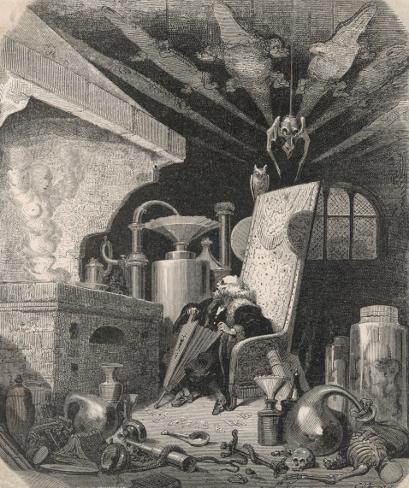
Enter the Alchemist

An alchemist costs 1000gp/month in wages and they bring the following to the table if hired:

Recreating potions: Based on a sample or recipe, an alchemist can produce a potion at twice the normal speed and for half the normal cost (see Magical Research).

Researching potions: An alchemist may also research new potions, but this takes twice as long and costs twice as much as normal.

A potion of healing is nothing more than a 1st level clerical Cure Light Wounds spell. And the magical research estimates the cost to make them a week of labor and 500gp/level in costs by a Cleric of 2nd level or higher. Assuming they have the recipe, the Cleric is no longer needed.

N: number of weeks in a month

Potion of healing Price = (N * 500 + 1000) / (N * 2)

This yields 2 potions available per week, and no Cleric PC has to assist (this is my reading).

Alchemists, I would reckon, are rare enough in most settings to be only present in larger towns and cities.

The Calendar

So, turns out that, as in many open games and the overused Gygax-attributed credo goes, a calendar is important for potions. The alchemist specialty gives wages in gp per month. But magical research is on a per week basis. How many weeks are a month in this world?

Only with that answer we can get the price of healing potions.

With an alchemist:

Simplifying a month having 4 weeks -> 375gp/potion, 2 available per week

Simplifying a month having 5 weeks -> 350gp/potion, 2 available per week

Without an alchemist:

Regardless of how many weeks are in a month -> 500gp/potion, 1 potion available per week (per PC Cleric actively working on it)

Gustav Doré

What Do?

This is of course an abstraction, but an interesting guideline nonetheless. More than one alchemist could be hired? Magic might not be readily available in your world. What about the formula for the potion, is it common enough? Etc.

In my OSE Stonehell open table game I settled to 300gp/potion cost, with only 50% chance of availability each week. With an upfront (one-time) cost of 1000gp to attract the alchemist to town.

Appendix

1. Consider also this article as a good resource on how to price potions of healing in games.

2. Also, while flipping through Electric Bastionland this morning, I found the general advice that TREASURE FOR XP should be bulky, expensive to the right person, and useless. On the other hand, TREASURE FOR GEAR, meaning items that will boost the PCs capabilities, should be useful for adventurers, but have otherwise little value. This is awfully untrue for potions of healing. They are both expensive and tremendously useful for everybody. Taking a magical vial to recover illness and wounds sounds too good to be true, and would be highly sought after by anyone with enough coin. Right?

Friday, March 19, 2021

OSR: Stonehell OSE Open Table 1-10

Have been running an open table of Stonehell by means of OSE.
Players come and go, we do 1 delve = 1 session, and they have to return to town before we finish the game.

What follows are my highlights on how it's going after 10 x 3h sessions into this megadungeon.
No detailed notes this time. I lifted myself of that burden by giving the players an XP incentive for writing those, and posting them on our discord. So far they've proved a great resource (?).

Mild Stonehell spoilers ahead, be warned!


Some Highlights

  • Party scared to hell and back to enter a soot-filled room.
  • Wulfa the fighter wrestling with the orcs, with members of the party betting behind.
  • Getting treasure from the Keeper of Secrets by using their wits.
  • Sheperd the zombies from the crypts to attack the giant fire beetles.
  • Methodically hiring a small army to (magically) blind and hunt the dragon.
  • Pools of hot water? Future saunas?
  • The group getting peppered by arrows coming from the invisibility trees when leaving from the dungeon.
  • Mylo the halfling dying due to peer pressure to spin the wheel of Lady Chance. The group quickly pulled funds together to make the Mylo memorial wing at the healing house back in town.
  • Portcullises posing the biggest threat in the dungeon.

Stonehell Referee Notes

  • Dungeon is vast and dense. We have explored bits of the canyon and about half of level 1. Price to gaming ratio is just ridiculous. Stonehell should easily be 50$, the team who put this together is being robbed.
  • Awesome ideas abound! Probably Stonehell as written gets you 80% there, and filling in the remaining 20% with your own material is the way to go. Some new monsters were really good to read (e.g. doom lure), can't wait for them to appear.
  • That said, I have my gripes and terseness comes at a cost.
    •  ... factions are outlined, but are missing some strong motivation and extra oomph and flavor.
    •  ... some traps are just a "T" on the dungeon map, or secret doors a simple "S". Expanding this aspect is a must for the referee.
  • Treasure is scarce. Feast or famine. It's a design decision by Mr. Curtis, and I can see the reasoning behind and what it's trying to reinforce. But my players have complained about it, and it can get frustrating.
    •  ... have been giving extra XP for number of rooms explored in a session.
    • ... and for session reports. These are crucial given the open nature of our table to bring new players up to speed.
  • Stonehell could benefit from more loops and connections. Jaquays and Melan would wince at some of the sections.
  • Downtime is the big left-out in the OSR. There are a gazillion dungeons in the space. But common questions on how to pace and structure the game between delves is often neglected. Products and advice for this are missing. Although I get this is very personal from table to table: some people skip it, some allow magic items/potion purchase others not, etc. I don't blame Stonehell here, but it's just an observation.