Thursday, December 19, 2019

Santicorn 2019: Drow Econ 101

Martin O requests the following gift:
What trade goods do the Drow export in order to destabilize their human neighbors? Gimme the weird stuff.
Things that make the Drow unique as a society compared to their surface-dwelling humanoid counterparts:
  • Live underground. Duh.
  • Full of hatred; waiting for their moment to snatch their deserved respect.
  • Do deeds that would be beneath other societies' standards. Slavery being the most obvious example.
  • Highly hierarchical, they follow a code of their own. Impossible to decipher for any non-Drow.
Drow prefer to destabilize a society with fear, blackmail, secrets or other powerful intangible currencies. From the shadows, without incriminating themselves. Letting their lackeys do their biding. Carrying out a carefully planned assassination. But let's focus on a less obvious take: Trade goods. Tangibles. What can Drow do to a society and destabilize your typical medieval-esque fantasy economy? With a longer horizon for fruition, economical destabilization through (mostly) licit trading can have dire consequences.

Due to the difficulties presented in the Underground, it will be tough for the Drow to tackle mass market and export of goods. Or compete in a price war. Food is more valuable than gold in the world below the surface. Therefore, either a very meticulous and calculated strategy or a stroke of luck (likely provided by the aid of a 3rd party) are the only ways such an edge can occur when talking edibles. Similar logic can potentially apply to energy sources, lacking the sun in the Underground is a HUGE disadvantage.

Generally, Drow can outperform and potentially destabilize their surface counterparts with one of two strategies:
  1. They produce luxurious items, finely crafted or rare on the surface. Requiring Drow expertise in manufacturing.
  2. They export or manufacture an item not available on the surface. Assuming a geographical advantage; access to artifacts or edibles not present outside of the Underground.

To the Point, Hammer!

I present 8 tangible trade good examples the Drow can use, broken down into broad categories (food, energy, etc.). Pick and choose. Or roll a d8. Or take all 8 at the same time and have a train-wreck. Treat each one as campaign fodder. Entries follow these formatted points:
  • Description: what is this, and why is it special?
  • Effect: does it have an in-game effect of interest to a group of adventurers? 
  • Cause: what has made the Drow capable of producing this item at an alarming rate, and/or at a low price?
  • Omen: what begins to happen when this good is introduced into a surface dwelling humanoid society?
  • Destabilization: longer term, why does this item destabilize their human neighbors?
The Omen is the first thing the PCs will notice. Perhaps they arrive to a new city or town. Or they return after a long hex-/dungeoncrawl to civilization, to find this new item appeared. The challenge for the PCs will be to investigate and uncover that this is a ploy, and will have dire consequences to the society in the long run. Allow some time (randomly roll some dice with to determine a horizon) until the Destabilization phase kicks in. That's usually the point of no return, and wiser adventurers would better leave town.

Food

Food is hard to get by in the Underground. Down there, starvation is the real enemy. Achieving destabilization through common edible goods would require a tremendous breakthrough, and is possibly not worth the effort for the Drow. There are more effective means to destabilization.

1) Troll Steak

  • Description: thick and gnarly meat, filling.
  • Effect: Troll Steak is a feast when in the Underground. But continuous consumption can have... interesting effects. If a person had troll meat for 3 consecutive days, Save vs Poison. On a fail, skin and inner organs start mutating, adopting the regenerative properties of a troll, but without the fire vulnerability. Of course, people can still die of age. Missing a day of meat consumption reverts the effects.
  • Cause: after years cross-breeding trolls in their laboratories, the Drow found the key to fertilizing them. Increasing the troll population at their whim, it is just a matter of waiting for a particularly harsh winter, where the grain reserves are running low on the surface cities. Drow can be patient to make their move, and will wait decades if necessary.
  • Omen: feeding entire populations is no longer a challenge. A surplus of meat is always a win, right? Well... cattle farmers will go out of business, unable to compete on the price race. Troll meat becomes a standard of living, consumed by all class segments of the population. Repeated consumption brings the regenerative effect to a sizeable portion of the population.
  • Destabilization: people develop the regenerative effect, after repeated consumption. Most wounds no longer being fatal, even the smallest disagreements turn to a violence bath. Creative torture measures flourish. Some even develop a twisted taste for physical pain, akin to the first segment in Black Museum. Society embraces the new currencies: violence, torture, and pain. Now the Drow only have to swap the Troll Steak back to a counterfeit. Or enjoy the society they helped create.

    Energy

    Similar to food, but to a lesser extent. Potentially hard to transport to the surface efficiently. In our world, oil and gas would be an incredible asset to have. But their value is unclear to me in your typical D&D game (magic being more common and all).

    2) Fecal Coal

    • Description: mundane coal, but in ridiculous quantities.
    • Effect: coal is black fuel. Nothing more, nothing less.
    • Cause: Drow houses struck a deal with Xiromanthas, a red dragon the size of a mountain. The dragon poops as much coal as the elves need, and then some, in exchange for gems and golden coins. An unprecedented surplus of the black.
    • Omen: coal prices have been driven to the mud. It's cheaper to warm your house than ever before, and winter is no longer the harsh season of the year. A coal cargo stored in a warehouse requires no locks or bodyguards. A cart of the black fuel will only get you a handful of apples.
    • Destabilization: this one is all about geographical location. In a town where half its working force is employed at the local mining industry, the effects can be devastating. Unemployment would hit hard, with the depression that surfaces from that. The working class taking the hardest hit (as always). They would be looking for new leadership that can put food on their tables... Time for the Drow to infiltrate an agent, push the politician on their pocket, or a similar ploy.

    Drugs

    Drowning, Pamela Gomez

    Drugs move insane amounts of money, power, and influence. They can destabilize whole countries and economies. There are plenty of examples in our own world, where disposable 1.5 million $ submarines are used to transport them across the sea. They empower those distributing them illicitly at an exponential rate.

    Assuming the Drow can create an efficient network for distribution of rare drugs, these can easily destabilize whole nations both economically and through devastating effects to their consumers.

    3) Blue Roses of the Syn'ar Valley

    🌷 DEMORIE 🌷
    • Description: their metallic scent elevates you in eerie, giving a feeling of relaxed power. Describing them as drugs is misleading, because the fact these roses are one is only known to the Drow and the most skilled scholars. Blue Roses are subtle.
    • Effect: when within smelling distance Save vs Poison, or become indifferent to sighting any sort of violence, no matter how crude or visceral. Someone getting knifed to death in front of you becomes less interesting than your morning's porridge... The act is not invisible to you, just utterly mundane and uninteresting.
    • Cause: Drow cities always had copious supplies of the Blue Roses from the Undeground Syn'ar Valley. The distribution network and their survival to the surface were the missing keys. But the right fertilizer started allowing the roses to grow on cities washed by the sun. Accelerating ultimately their rapid distribution. They have to spread quickly, otherwise their effect might be uncovered! loosing their destabilization effect.
    • Omen: priced items, Blue Roses are introduced to the surface dwellers by powerful merchant families. Soon every petty noble wants their gardens full of them. It's a symbol of status. And the rich always want to be part of a material capitalistic trend. Full grown gardens are a slow process to attain, but a worthwhile one.
    • Destabilization: when every garden, grove or patch of land is full of these roses, the ruling class is literally indifferent to any sight of violence. Assassinations can be carried just in front of them at a dinner party, and they won't even blink twice. Guards won't be alerted on a violent revolt. An orgy of violence can unleash without anybody of power moving a finger. The moment is ripe for the Drow taking over, and keep the common-folk as slaves. Maybe.

      4) Ghoul's Marrow aka "Black Gums"

      • Description: denser and darker than honey, the two could be confused otherwise. Has to be eaten to apply the effects. Highly addictive, and can have fatal side-effect consequences. Could be sold as a medicine even, the endurance inducing properties to body and soul so invigorating. "Black Gums" is both the visible cue on consumers, and the name commonly used for this drug.
      • Effect: even one consumption is extremely addictive. Anyone trying the drug has to be restrained for the next 3 days, or they will try by all means possible consume more doses (even going to self-harm to do so). On every consumption of the drug, Save vs Poison. Gain d10HP and +2 to all Saves regardless of the result. On a fail, the consumer turns into a ghoul in exactly 7 days. No Clerical prayer will work to prevent this, it's not a curse.
      • Cause: the name is just a mislead, the consequence of consumption. PCs will think that's the source of the drug. Let them. The origins are a bit more twisted. Drow have been cross-breeding cannibalistic slaves for generations, studying their behavior. Finally understanding their physiology, the Drow found the key cranial source of the appetite. And are able to induce it with the right combination of narcotics.
      • Omen: stories of miraculous recoveries, elder cripples able to walk again, reach the PCs ears. The local duke won the recent war against all odds, like by a miracle. His soldiers more efficient at their task, able to endure more physical and mental pain. Then the first ghoul sprouts. From there, it's a quick down spiral.
      • Destabilization: the population is either addicted to the drug, or a ghoul as a consequence by now. The undead creatures lurk at night like an army. "Show me your teeth" becomes a common greeting when encountering strangers. The Drow have a weakened target, and half a ghoul army waiting to take over.

      Mundane Luxury Items

      Slaves provide skilled hands to produce some of the finest items. In almost every segment, objects of quality and bizarre properties attract surface humanoids. Their alien nature part of the selling point. Barring problems in their distribution network, Drow can gently introduce luxury items to visible individuals (merchants, nobles, warlords), in hopes of forcing a fashion trend. Fear of missing out is real. Very real. And acting recklessly is a natural consequence of said fear.

      5) Spider Silks

      exellero
      • Description: brightly colored silks, soft as a lover's touch. Embroidered out of spider webbing by tiny gnomish slave hands. A prized possession for fashionistas and adventurers alike.
      • Effect: Let's focus on Spider Silk cloaks. Their price go at d4*100+300gp. Roll a d6 for the effect on this cloak:
        1. Fair piece of garment, envy of sultans.
        2. This silk can't be stained by blood.
        3. Counts as leather armor, but takes no weight in encumbrance/item slots.
        4. Wearer takes no falling damage on a 20ft or shorter drop.
        5. Increase the number of followers/henchlings you can have by 1, regardless of your Charisma score.
        6. Translucent, wearer or objects concealed by this silks gain a +1 to hiding when in shadows.
      • Cause: locating the gnome enclave within the Underground was an arduous task. But with that, plenty of skilled hands in the crafting of Spider Silk were added to the slaving task force of the Drow.
      • Omen: these fine cloaks become a status of symbol. Everyone wants one. Squires queue in front of the regal tailor shop. Loans become frequent to purchase multiple changes. Burglaries and planned heists increase exponentially, as manors start protecting their wardrobes more than their treasure chests.
      • Destabilization: taxes get a hefty increase to finance the ruling class and their fashion habits. Disenchantment between the common-folk, protests and strikes flourish. Social unrest. Several merchant families and nobles go bankrupt, leaving a power vacuum. Unable to pay for mercenaries or hired swords, they are at the mercy of their lenders.

      6) Myconid Cranial Condiments

      • Description: sized colorful grain-sized, somewhat mushy.
      • Effect: sprinkling a pinch renders anything amazingly flavorful. It's like hearing Beethoven after being born deaf. Priced reasonably (cost of a mug of ale per portion).
      • Cause: smoking powdered myconid brains has been practiced in the Underground for centuries. But the Drow know how to twist the knife a little deeper. Experimenting. Plotting on extravagant uses. Alchemical labs and gourmands alike arrived to this condiment.
      • Omen: you come across an inn where they serve a dish of worm stew. Street food stalls offer grass, cloth, and even mud, complimented with the novel Myconid Cranial Condiments. Food gets creative.
      • Destabilization: able to overcome any food shortages. Missing a crop shipment? Eat spiced maggots. BUT, this doesn't change the nutritional value one bit. Illnesses and famines begin to sprout. Mercantilism in the mid to high end food industry takes a hard blow. Open feuds between merchant families, some going completely broke.

      7) Carnal Suitor Perfume

      • Description: smells like a mixture between intertwined sweaty bodies, roses, and faint dried plasma. Invigorating. Pleasant.
      • Effect: this perfume could well be in the drug category. A vial is priced like a good seasoned wine. Lascivious immediate effects, that can spiral in the very long term. Anyone smelling Carnal Suitor has to Save vs Poison, if they decide to resist the effects (Drow are immune). On a fail, the perfumed individual becomes a libido driven sexual magnet. Urgency to fulfill the most primitive needs grows.
      • Cause: mixture of watered down floor swipes from Underground orgies dens and fighting pits.
      • Omen: the PCs could come across a wild orgy at their tavern of choice. Or individuals openly fornicating on the open of a freezing night. More than one odd matching pair should raise eyebrows.
      • Destabilization: local churches and temples start a holy quest to finish this descent into mad lasciviousness, causing social unrest. Long term, the birth rate torpedoes to the roof. The overpopulated city will become hard to feed with time.

      Mundane Magical Items

      The artifacts and magical paraphernalia found within the twisted labyrinths of the Underground are akin to our own gold rush. In comparison, the surface wands and magic trinkets are like the only souvenir shop selling hats before a day-long tour of the Egyptian pyramids. Mid-summer.

      Including these seems like a cheat when talking about trading goods. But minor magics are fair game. Enough of them can make it to the surface, and they don't disturb the day to day life to the point of destabilization.

      8) Subsurface Shells


      Aaron Griffin
      • Description: shaped like a broken egg-shell, covering the eyes when worn. Surprisingly comfortable. Black like the abyss.
      • Effect: wearing a Subsurface Shell confers blindness after a 30ft range. Mildly inconvenient. On the flip side, it grants powers to communicate telepathically at a distance of up to 1 mile, if the individuals have previously met and shaken hands (basically any type of physical contact). Constant communication is so addictive... Save vs Device to take it out.
      • Cause: Drow assassinated a city of Illithids. Every. Single. One. The octopi invented an apparatus capable of the most pathetic telekinesis. Producing them is surprisingly simple and cheap.
      • Omen: Subsurface Shells are introduced en masse. Cheap as they come, everyone wants one. And they can have it for change. To kick, it's all advantages. Information just flows. Fast. Transportation is relegated, no longer necessary. Leaving the security of home becomes... inconvenient.
      • Destabilization: tuning in becomes an effort. There is no way to refuse telepathic communication. But at the same time, physical isolation is the real deal. There's no incentive to leave home anymore. So you just stop doing so. Talk is cheap, and the signal-to-noise ratio is garbage. Yet this new form of communication is highly addictive. Gaining a "connection" by touching another Shell user is charged at a hefty rate. Whores and escorts no longer need to open their legs, but instead to have an interesting rhetoric. Now an isolated society, the Drow could literally march through town unnoticed. The 30ft visual range doesn't help of course.

      Reading Reference

      Wednesday, December 11, 2019

      Spell: Summon Avatar*, pt. 1

      As I was recently working on Prayers (a small system to introduce Cleric spells for Knave), there was a rough equivalent between B/X systems (mainly taken from BFRPG and LotFP) and the essential Prayers. I chose 25 such divine powers, that in my eye capture what a Cleric should be capable of, and what makes them distinct. Prayers go up to 5 Clerical Implements, which roughly translates into spell Level 5.

      But hold on, that means you allow Level 5 spells at PC Level 5? U crazy Hammer?!?!
      Yes and no. The cost to use Prayers is bound to taking a Knack and more importantly owning Clerical Implements (CI). Filling up the precious Item Slots of the Knave PC. Oh, and CI break fairly easily. And their appearance in the game is completely up to referee's fiat.

      There are exactly 3 Prayers out of the list of 25 that I put together myself rather than adapting from other OSR systems:
      • CI 1: Divine Ceremony
      • CI 3: Summon Avatar*
      • CI 4: Consecrate Land*
      Let's take a closer look at the second.

      Its intent is twofold. The reversed spell (Dismiss Avatar, marked with the *), takes the form of a creature banishment. There are several equivalents we can find for this reversed form in other systems. For instance the Cleric Level 7 spell in LotFP Holy Word*, the Cleric Level 5 spell in BFRPG Dispel Evil, or the 5e Cleric Level 4 spell Banishment. Remove a being that doesn't belong to this place from existence, be it temporarily or permanently. The original of Summon Avatar* is in the title: you call the physical manifestation of your god (although one of their lackeys may suffice) to come to your aid. Of course, such a request will go through the tightest scrutiny, and could go awfully wrong.

      But let's take a step back and take in some adjacent media, specifically the Die story line, which started as a comic book and (naturally) evolved into a ttrpg. In there, a bunch of kids are transported to the D&D stories they play in a Jumanji style tale, each taking up a class represented by a die (d4: Dictator, d6: Fool, d8: Grief Knight,...). The dice they take are not like your typical Fighter/Cleric/Thief/MU, but interesting twists coming close to these trope archetypes.

      The Cleric in the group is instead called a Demonbinder (although Godbinder makes more sense, see below), and acts as a Summoner of Gods, giving and claiming favors from deities. Like a warlock dominatrix. I love it. This, perfectly embodied in the following excerpt from the comic book, is an accurate representation of what Summon Avatar* should feel like if saying the Prayer goes well:

      From Die Issue #2
      From Die Issue #2

      "Godbinders are Clerics as demonologists."


      Summon Avatar*

      Duration: 1 round/[Level]
      Range: 40'
      Save: Yes|Yes
      Clerical Implements: 3+. This is the only Prayer that allows you to use more CI at saying time. Minimum is 3, but you can go above that.
      Effect:
      This Prayer requires strenuous concentration. If at any point during the duration you take damage, do a Save. On a failure, the spell ends.
      Summon Avatar
      Choose number of [HD] to summon an Avatar of your deity, god(s) or authority. Up to double the CI used. Do a WIS save. Negative modifiers to the save for:
      • -1 for each HD chosen.
      • -1 if you've never summoned this Avatar before (blind call).
      Positive modifiers to the save:
      • +1 for each [CI] you choose to destroy during the summoning.
      • +1 for each d12 HP you sacrifice.
      • +1 for each other creature you sacrificed the last turn (live stock, humanoids, etc.).
      • +1 if on appropriate Consecrated/Desecrated land (see the Consecrate Land* Prayer).
      • Advantage if you know the Avatar's True Name.
      If you get a Critical success on the roll, the Prayer duration is 1 turn/[Level] instead.

      Dismiss Avatar
      Target a creature that doesn't belong here (celestial, demon, elemental, etc). Its HD have to be up to double the CI used. Do an opposed WIS save against the creature's CHA. Modifiers:
      • You have Disadvantage if target has more HD than your [Level].
      • You have Advantage if you know the target's True Name.
      If you succeed, the creature is dismissed to where they came from for the duration. If you get a Critical success on the roll, the creature is permanently dismissed and the spell ends.

      But Hammer, what IS an Avatar??
      Fear not, I will explain how I intend them to work in game (apart from HD, which is an obvious measure already baked in), and prepare some random tables to determine what Avatar you actually summon. They'll be linked here when they are finished in a coming article.

      Reference Reading List

      Saturday, December 7, 2019

      Knave Spellcasting (and Clerics)

      This is the third post in the series, where I try to develop my Knave hack. The ultimate goal is to have a ready to use modern interpretation of old B/X rules for play in my games. Even though Knave is brilliant in its simplicity, it also provides a solid foundation to start building and adding.

      First I tackled Ancestries, and then decided to go for Class-like abilities called Knacks for Knaves.

      Fighter/Thief/Magic-User/Cleric are a must options to be conserved in my game. Knave doesn't bother with these distinctions with the "equipment is all" philosophy. That's fair. But players tend to favor distinction and character customization. Hence the Knacks, to add options and distinctions. From the four, the first three are even covered in "vanilla" Knave. Not the Clerics though.

      Magic-User spellcasting is intuitive and described by "vanilla" Kave in the following (Designer Notes removed):

      The spell lists from any old-school RPG will work perfectly well in Knave, provided that they go up to 9th level. There are many free lists of classic spells available online.

      In Knave, PCs may only cast spells of their level or less, so a level 3 PC could only cast spells of level 0 to 3. Spells are cast out of spell books, which must be held in both hands and read aloud. Each spell book can only be used once per day. Importantly, each spell book only holds a single spell, and each spell book takes up an item slot, so if a PC wants to be able to cast a wide variety of spells, they’ll have to fill most of their inventory with spell books.

      PCs are unable to create, copy or transcribe spell books. In order to gain new spell books, PCs must adventure for them, by either recovering them from dungeons or looting them from other magicians. The higher the level of the spell book, the rarer and more valuable it is. PCs openly carrying high level spell books are likely to be hounded by bandits and wizards looking to “acquire” them.


      When a spell allows for a save, make an opposed Intelligence save against the defender’s relevant ability, usually Dexterity for ranged attack spells, Constitution for life-draining spells, Intelligence for mind-altering spells, or Wisdom for Illusions.


      Arcane Spellcasting

      Magic-User spellcasting something easy to expand and adapt on. My take on Arcane Spellcasting:
      • Instead of the default list, I will be using spellcasting from GLOG, since my love for the Magic Dice (MD) mechanic is unconditional. This conserves the level-less spells from the original list in Knave, but adds depth.
      • Every spell can be cast as many times the MU wants, as long as they have a spellbook in their inventory, and available Magic Dice. Reputable wizards will fill their Item Slots quickly.
      • There are actually 3 ways a PC can cast arcane spells, and they all involve taking a Knack.
        • Student of the Arcane gives the ability to read spellbooks. This Knack will be the bread and butter of many PCs.
        • Spell Tattoos gives a signature spell.
        • Chaos Mage is a nice way to get a random spell per day. It could be useless, or a campaign-changer. 
      • The saves for spell effects are conserved pretty much from the original 4th paragraph above (from "vanilla" Knave).
      Easy, just use GLOG arcane spellcasting for Magic-Users, à la Skerples.

      What IS a Cleric?


      A B/X Cleric usually has part or all of the following features:
      1. Decent HP. Better than Thief and Magic-User, worse than Fighter.
      2. Can wear heavy armor, wield shields, and use (blunt) weapons in combat.
      3. Very effective against undead. Either by a specific Turn Undead feature, or by means of Cleric spells.
      4. They can create holy water, very effective against certain foes. Consecrate sites too.
      5. Can cast divine spells. Usually up to a level or two less than the Magic-User. These include, unique to a Cleric:
      • Healing and curse removal spells
      • Bless/bane
      • Silence, dispel magic
      • Protection to different hazards (poison, certain alignments)
      • Divinations (detect evil, detect magic, locate object, commune, etc.)
      • Some "biblical" damaging hazard: insect plague, wall of fire, earthquake, etc.
      • Some include a regeneration/restoration resurrection spell. That restores lost level drains, limbs from the dismemberment table, or a brings back a dead character entirely.
      Let's go ahead and list again the Knacks of Faith I wrote for Clerics, and see what is covered and how:
      • Blind Faith: Take a sacred oath with your faith/authority. You gain the ability to use Clerical Implements (bells, candles, herbs or similar), and gain one. You can use it with one hand to cast Prayers.
      • Turn Undead: Level# per day, force up to WIS bonus+Level HD worth of undead to make a morale check using your action. Apply a negative modifier equal to your WIS bonus to the check.
      • Pacifist: Whenever you get a reaction roll to resolve a situation that could end up in combat, if you and your allies remain calm, the roll is with Advantage.
      • Hammer of The Authority: Grant Advantage to any morale checks your retainers/hirelings/acolytes make as your below a holy litany and lay waste with your warhammer.
      • Sacred Feast: Out of combat you can bless Rations or Snacks that are meant to regain HP with your Clerical Implement. Creatures add your WIS bonus to their HP healed.
      • Witch Hunter: You smell the presence of Magic Users, Witches, or other Clerics.


      1. and 2. are not explicitly covered. And probably don't need to. All Knaves already have the same HD size (d8), and can wear as much armor as they want. As always, the limiting factor are the Item Slots, and the hands carried. By allowing Clerics to cast spells by still holding a shield or wielding a sword, we make a clear distinction to the Magic-User.
      3. Turn Undead has its own Knack.
      4. These don't need a specific feature, and are better covered by spells (if at all).
      5. The Blind Faith Knack covers spellcasting. Still need to check what these have to cover. But the other Knacks are also important (and probably not part of the B/X repertoire, but rather a more modern Paladin or Knight).
      Pacifist and Hammer of The Authority focus on the social aspect of the Cleric. In my mind, a zealot priest is a holy warrior that leads with word and pose. Their usefulness is very campaign dependent, and if hirelings are a thing on your game or not.
      Witch Hunter is a version of the Detect Magic spell, that can pin-point spellcasting individuals. It doesn't work on objects or places, so it is again useful on a specific type of game/campaign.


      Spell selection will be key here, to have the iconic Cleric spells included, and roughly scale them by level. Contrary to Arcane spellcasting, Prayers should be reliable (no Mishaps/Dooms), but there should be a finite number of castings per day (some save?). My 5e past tempts me to make all spells available at a certain level, the same way cleric/druid/paladin work in that edition.

      TL;DR: Enter the Knave Cleric

      A Clerical Implement can take many forms... by Jens Kuczwara

      Clerics, priests, paladins, zealots and holy individuals fuel their powers by saying Prayers to their deity, god(s) or authority. More reliable power than an arcane wizard could ever dream of. A PC that has taken a sacred oath, and taken the Blind Faith Knack, is able to use Clerical Implements (CI). These take the form of bells, candles, herbs or similar tools, and are the fuel of these divine Prayers. You could design some CI for your game this way.

      CI are rare and obscure items. They can't be crafted or bought, but could be traded, found, or retrieved. To a fellow priest or scholar they are invaluable. To most peasants, useless trinkets.

      Saying a Prayer requires an Action (unless otherwise specified), and the CI held on one hand when doing so. The rest of the CI can easily sit on the backpack and still be serviceable. Each CI takes up an Item Slot. The more CI carried, the more numerous and stronger the available Prayers become. Note that some Prayers require a Save during the saying (WIS Save, unless otherwise specified in the Prayer description).  In addition, the character level has to be equal or higher than the number of CI required for a certain Prayer. Otherwise, there are no restrictions and all Prayers are automatically available.

      Example: Merrick the priest is Level 3 and has 4 Clerical Implements. They can use any of the 15 Prayers in the lists below up to and including "3 Clerical Implements".

      After using any number of CI for a Prayer, do a WIS Save. On a fail, lose the ability to use those CI again until you rest for the night. If the number rolled on the save die is equal or lower than the number of CI used, the CI break completely (the bells crack, the incense rots, the candles melt, etc.), and you lose those items.

      Spells marked with an * are reversible, and can be used in either form, separated with |. Some spells have a varying [Level] value of the Cleric saying the Prayer. A round is 10 seconds, a turn 10 minutes.

      1 Clerical Implement

      • Bless*: Duration 1 min/[Level], Range: 40', Save: No|Yes
        • Creature of your choice gets +1 to hit and +1 to save vs fear effects (incl. morale)|Bane is opposite
      • Cure Light Wounds*: Duration: Permanent, Range: Touch, Save: No|Yes
        • Heal d6 + [Level] HP from a creature OR remove one temporary condition (stunned, deafened, blinded)|Deal d6 + [Level] HP to a creature. Double if undead.
      • Divine Ceremony: Saying time: 1 hour, Duration: Special, Range: Touch, Save: No
        • Choose one of the following. Each can only be done once on a creature:
          • Funeral: preserve a dead body for [Level] days from becoming undead.
          • Join: willing creature joins your faith. They gain advantage on next [Level] saves.
          • Wedding: marry two willing creatures. +1 to saves for next [Level] days as long as within 40'.
      • Purify Food & Drink*: Duration: Permanent, Range: 30', Save: No
        • [WIS bonus] portions of food & water edible|non-edible
      • Remove Fear*: Duration: Special, Range: Touch, Save: No/Yes
        • Subject on effect of Fear, can do a Save adding your [Level]|Touch a creature and cause them to do an opposed Save, or they run hysterically for [Level] rounds in Fear.

      2 Clerical Implements

      • Augury: Duration Instantaneous, Range: 0, Save: No
        • Ask if particular actions will have good or bad consequences. 70%+ 1%|[Level] chance for answer. Event up to 2 turns in advance.
      • Command: Duration: 1 round/[Level], Range: 20', Save: Yes
        • One word command to a creature that can hear you. Opposed save their CHA vs your WIS. On fail they must follow command as best they can. No directly harmful words (e.g. die, jump (off cliff)).
      • Delay Poison: Duration: Instantaneous, Range: Touch, Save: Yes
        • Creature that was poisoned in the last 24 hours gets a Save to resist.
      • Resist Cold*: Duration: 1 round/[Level], Range: Touch, Save: No|No
        • Temporary immunity to minor cold|fire weather conditions (e.g. blizzard, dessert). +3 to saves against major cold|fire effects (e.g. fireball). Reduce [Level] damage from such sources .
      • Silence 15' Radius: Duration: 2 rounds/[Level], Range: 150', Save: Yes
        • 30' diameter area of absolute silence. No spellcasting possible. Stationary area if object targeted. If creature targeted, they get opposed save.

      3 Clerical Implements

      • Dispel Magic: Duration: Instantaneous, Range: 120', Save: Yes
        • Save WIS for spell to work. Affects a 20' area. All spell effects in the area end. If spell is targeted at creature or object, they lose the ability to create magical effects for [Level] turns (includes magical potions). Creatures can do an opposed save to avoid.
      • Remove Curse*: Duration: Instantaneous, Range: 20', Save: Yes|Yes
        • Save to remove one curse from an object or creature. Does not remove the curse from the object, but allows a creature to take it off (shield, weapon, armor).|Bestow curse if creature fails opposed save. Referee has to agree on effects. Examples: -2 to Saves, -4 to hit, etc.
      • Sacrifice*: Duration: Instantaneous, Range: Touch, Save: No|Yes
        • Transfer any number of HP from Cleric to the target creature|Drain 1d6 + [Level] HP to the Cleric. The creature gets a save.
      • Summon Avatar*: Duration: 1 round/[Level], Range: 40', Save: Yes|Yes
      • Speak with Dead: Duration: 1 turn, Range: 10', Save: No
        • Corpse answers up to [Level] questions (sometimes cryptically) with knowledge it had in life. This is imprinted knowledge "stored" in the body.

      4 Clerical Implements

      • Consecrate Land*: Saying time: 1 hour, Duration Permanent, Range: 300', Save: No|No
        • Choose an area [Level]x10' in diameter. It becomes holy land. +3 to any Turn Undead and +1 to saves against fear. Undead also suffer -1 to all rolls.|Opposite effect can neutralize an area, or desecrate it.
      • Create Water: Duration: Permanent, Range: 20', Save: No
        • [Level] gallons are created with the saying (1 gallon suffices for one day for 3 creatures). Containers are needed.
      • Cure Serious Wounds*: Duration: Instantaneous, Range: Touch, Save: No|Yes
        • Heal 2d6 + [Level] HP from a creature OR remove one condition (stunned, deafened, blinded, paralyzed)|Deal 2d6 + [Level] HP to a creature. Double if undead.
      • Detect Lie: Duration: Instantaneous, Range: 0, Save: No
        • Determine if any one statement made to you in the past hour was true or false. Honest mistakes are not detected as lies, nor are untrue statements made by charmed or bewitched individuals, for they know not what they say.
      • Spell Immunity: Duration: 1 turn/[Level], Range: Touch, Save: Yes
        • Make a WIS save. On success, target gains resistance against spell and spell-like abilities: Advantage to such Saves. On fail, it is Disadvantage. Duration can be divided with up to [Level] targets.

      5 Clerical Implements

      • Commune: Saying time: 1 turn, Duration: 1 turn, Range: 0, Save: Yes
        • You get in direct contact with your authority. You get to ask [WIS bonus/2] (rounded up) questions with "yes" or "no" answers. During the spells duration, you are incapacitated in a trance. After you are done, Save or fall in a coma for [Level] hours.
      • Create Food: Duration: Permanent, Range: 10', Save: No
        • Create 3x[Level] rations that rot in the next 24 hours. Saying Purify Food & Drink extends duration by another 24 hours.
      • Insect Plague: Duration: 1 turn, Range: 300'+[WIS bonus]x10', Save: Yes
        • A 60' diameter swarm of locusts are summoned, which heavily obscure the area. 9HD creature with 3 attacks dealing d3 damage (double damage if unarmored). Creatures of 2HD or less in the area must make a morale check when this spell is cast. Every turn, do a WIS save. On a fail, the locusts turn to dust.
      • Raise Dead*: Duration: Instantaneous, Range: Touch, Save: Yes|Yes
        • Restore to life a deceased humanoid, that has been dead no longer than [Level] days. Soul has to be willing. They come back with 1 lost level (or HD). Undead can't be restored this way. Spell can't bring back someone who died of old. Do a WIS save. On a fail, the spell consumes a random life within 40' of the subject.|Opposed save against touched creature. If failed, they are killed instantly. Otherwise, they take 2d8 damage. Undead can't be affected this way.
      • True Seeing: Duration: 1 round/[Level], Range: Touch, Save: No
        • Target sees things as they actually are. See through normal and magical darkness, secret doors, illusions, invisible creatures, transmuted, etc.

      Monday, December 2, 2019

      GLOG Wizard: Densomancer

      This is a different take on the Aeromancer, one flavor of Elementalist wizard. Or perhaps Telekinesis? A Densomancer has some of the iconic air control spells, and can fool anyone to believe them in having the cerebrum of a telekinesis wizard. But actually a Densomancer uses a purer channel for their magic. They mutate the density of different objects and creatures to their advantage. Or even space itself. This can create some interesting effects on a Densomancer and their surrounding environment.

      Densomancers have to be conservative outdoors, out of fear of floating to oblivion. But they can make a discrete living, for example working for merchants and noble houses in need to transport and measure goods with precision.

      by Jordi Ponsa

      Perks

      Gain long robes. You can hover at a distance of an inch from solid ground. Your passing still produces obvious noise (creaking of wooden floorboards, etc.).

      Drawbacks

      Endless experimentation made your body's density unwieldy in liquids. Whenever you are swimming on a liquid, you automatically sink.

      Cantrips

      1. You can precisely estimate the weight of any object or creature, provided you touch it for 1 minute with both hands.
      2. You can harmlessly hover one small object (a coin, a scroll, a candle, a fork,...) with a wave of your finger. It can only be moved up/down.
      3. Snapping your fingers can produce a mild wave of air (cold or warm, your choice). Enough to make a candle flicker at about 20' distance, but not enough to extinguish it.

      Spells

      Spells marked with an * were shamelessly lifted verbatim from the Skerples blog.
       
      1. Flexible Skin
      R: touch T: creature D: [sum] hours
      Creature's skin turns hard as stone, or soft as wool. Choose one at casting. Can be changed from one to the other by spending [dice] minutes. Increase AC by [dice], except for blunt (hard)/slashing (soft) attacks, where AC actually decreases by [dice].
      Benefit is long-lasting, and dramatically increases the survivability of the squishy Densomancer. Similar to a Mage Armor, but with a drawback case.

      2. Control Air*
      R: 50’ T: a gust of wind D: concentration
      Control a gust of wind within 50'. At one [die], use wind to (a) clear away fog or gas, (b) extinguish a fire no larger than a torch, (c) blow all the papers off a desk, (d) with concentration, provide enough of a breeze to power a tiny sailboat. Each [dice] you invest increases the effects.    

      3. Light Bones
      R: 10'x[dice] T: [dice] creatures D: [dice] minutes
      [dice] creatures get their bones to loose all density. For the duration, the targets increase their walking speed by 10', and their jump distance by [sum]'. Their AC is lowered by [dice]. 
      We significantly increase mobility for a considerable duration, but have a drawback by lowering AC. 

      4. Secure Object
      R: 50' T: [dice] objects D: [sum] minutes
      You point your finger at [dice] objects on the ground, changing their consistency. Their weight increases by [sum]x100lbs (x45kg) for the duration.
      Forces the player to ask about the environment. Can be used to make a chandelier drop on the band of orcs, make sure a door is hard to open on a chase, drown someone, and other clever effects. It also encourages the player to look at their character sheet for objects to use the spell with.

      5. Balance Weapon
      R: touch T: weapon D: [sum] hits or [dice] hours, whatever comes first
      You hold a weapon on your hands and precisely recalibrate its balance. Now enhanced, increase the damage die by one size (d6 -> d8, etc). After [sum] successful hits or [dice] hours (whatever comes first), the weapon is back at its imperfect state.

      6. Hurl
      R: 200' T: small object D:0
      Choose [dice] small, loose objects within range (a stone, a book, a tomato), not being worn or carried. Magically hurl at incredible speed against [dice] targets within range. Each object deals 2x[sum] damage on impact, to both the target and the object. Target can Save vs Dexterity to halve damage.
      Similar to the classic Magic Missile, and follows the assumption that you're changing the density of a small object, using Telekinesis of sorts. It has the small limitation that you need an object, and it gets destroyed. This is the 1-6 damaging spell.

      7. Balloon
      R: 50' T: [dice] creatures or objects D: [sum] rounds
      Targets have to be up to humanoid in size. They start to ascend like a balloon, at a rate of [dice]x10'/round. If they hit a solid object, they stop ascending. When the spell ends, gravity works again for them. 
      Can be used to propel foes into the sky, or reach high areas. There are several creative uses, and it has to be timed correctly. Good interaction with equipment too: rope (for full balloon experience), rocks (to make them rain on foes), etc.
       
      8. Fluid Air
      R: 50' T: [dice]x20' cube D: [sum]x2 rounds
      Air in the area acquires properties from water. A creature must hold their breath when within the target area, or begins to suffocate. Objects stay in place, but loose their friction if pushed/pulled. A creature can swim in the target area as if they were diving underwater.
      This has a tons of applications, in an out of combat. It can suffocate a horde of enemies. Or act as a Fly spell where the caster has to "swim". A clever player could find a plethora of uses for this, offensive/defensive and situational.

      9. Slow Feet
      R: 50' T: [sum] feet D: [sum] rounds
      You can designate up to 2x[dice] creatures. A total of [Sum] feet turn dense and heavy as a boulder, which can be freely distributed among the designated creatures. Creatures with dense feet reduce their speed by [dice]x10' per slowed foot.
      An updated version of the Slow spell, but that is very dependent on the number of feet of the creature you're fighting, and their preferred attack. A pack of wolves? Not so good. Good for chases.

      10. Featherfall*
      R: 10’ T: [dice] creatures or objects D: 0
      If you would take fall damage, you can cast this spell as a reaction to negate it. You float gently to the ground (possibly alarmingly late).

      Emblem Spells

      11. Wall of Wind*
      R: 20’ T: wall D: 1 minute
      You summon wind to form a 10’ by 10’ panel per [dice]. You can mold the wall, similar to cutting holes and notches in a sheet of paper. The wall does not block line of sight. Powerful winds will knock small projectiles out of the air and prevent vermin (anything smaller than a rat) from crossing. Ranged attacks that pass through the wall get [dice]x-3 to hit.

      12. Solid to Viscous
      R: 50' T: [dice]x20' radius D: [sum] rounds
      Designate a solid object or surface within range. Target area turns viscous for the duration. You can also try to end the spell earlier with a Save using your action. Density of a pudding. Possible to pass through, although it's a slow process. If body is caught in the viscous object when the spell ends, take [sum] damage and stuck. Good luck getting out.
      Can be used to escape out prisons, and pass walls. Also to slow enemies down in a similar way a Grease spell would (or a bunch of nails). Has a drawback if you're too slow to pass, and a player can come with good ways to "trap" creatures in to receive the damage.

      Mishaps

      1. MD only return to your pool on a 1-2 for 24 hours
      2. Take 1d6 damage
      3. Random mutation for 1d6 rounds, then make a save. Permanent if you fail.
      4. Start to ascend like a balloon, at a rate of [dice]x10'/round for 1d12 rounds. You then fall.
      5. Your legs' weight increases uncontrollably. You have to sit and can't move for 1d6 turns. A strong horse could probably pull you.
      6. Granite-heavy hands. You drop any items you were carrying, and can't wave them to cast any spells nor wield any object for 1d6 rounds.

      Dooms

      1. Your feet are heavy and lethargic. Halve your walking speed permanently. Take this doom twice and you can't walk.
      2. No longer trust in your abilities. Save vs Fear when outdoors, out of panic of floating to oblivion.
      3. Ascend like a balloon, at a rate of [dice]x10'/round. Doesn't stop.

      Monday, November 18, 2019

      Knacks for Knaves

      This is version 1.0 1.1 of some powers for Knave, with aim to be a modern interpretation of old B/X rules for play in my games. Knacks for Knaves. First use for them will be a run on a megadungeon aimed at Labyrinth Lord, Stonehell. They will be part of the Knave hack I'm working on for said game, after I tackled Ancestries, now come a concept similar to Class. Special abilities and powers called Knacks, that give that power advancement feel.

      Some scattered notes on adding these to the streamlined machine that Knave is:
      • For a recurring campaign, players should feel enticed to gain new powers as they level up (aside from gear and coin, of course). Knave is very strong for one-shots or short games, but how good does it hold up for longer campaigns?
      • We make them optional. Idea is to give to choice of score improvement (default choice with vanilla Knave), or take one of these powers to the players. Hopefully most will choose the latter.
      • We give choice. 48 Knacks, no less. They are also completely independent, so there's no requirement to pick any Knack. Of course there are obvious synergies, but that's for the Munchkin players to figure out.
      • They are not balanced between each other. Things like Blind Faith and Student of the Arcane will be picked a lot, since they are basically the spellcasting for Cleric and Magic User - like characters.
      • In my Knave hack I took spellcasting from GLOG, since my love for the Magic Dice mechanic is unconditional. You will see references in the entries below about that. Blind Faith introduces spellcasting for Clerics, which is a different mechanic, with Prayers (but more reliable than MD are).
      As any good Thief, I've taken many of these powers from different sources. I rest on the shoulders of heroes. They're meant for personal use in my home game, and if you find use for them that's an achievement.

      Knacks for Knaves - The Rules


      The Doc In case you want to have a living document to print out, or leave me some commentary

      Knaves start at Level 1 with one Knack from the list below of their choice.

      When a Knave gains a level, instead of increasing a single Ability Score by +1 a Knave may select one Knack from any of the categories below, without restriction. Limited to one Knack per level up.

      The categories are for flavor only, and very broadly separate Knacks into different buckets.

      Values within squared brackets [] are variable.

      WARRIOR (Knacks of War)

      A knight with the "Great Weapon Fighter" Knack, by Valery Klishevich

      • Duelist: On a critical you may choose to either:
        • Disarm your foe (assuming this is possible), or
        • Put them on the backfoot, granting you Advantage on your next attack or stunt.
      • Great Weapon Fighter: when wielding a two-handed weapon, reroll damage < 3. Keep the second result. 
      • Protector: Sacrifice your Action to absorb damage inflicted on an adjacent ally. STR save for half-damage.
      • Riposte: When a creature misses you with a melee attack, make an immediate counter-attack. This does not cost you your normal Action. Only possible once/round.
      • Shield Master:
        • Advantage on STR attempts to knock an opponent prone w/a shield bash.
        • When an effect allows a DEX save for half damage take no damage if you save as your shield absorbs the blow (-1 quality to shield).
      • Two-Weapon Fighting: When you hit a foe while wielding two weapons, roll damage for both and apply the higher.

      BARBARIAN (Knacks of Brunt) 

      Barb with "Muscle Armor", by Daniel Zrom

      • Berzerker: When reduced to 0HP, become frenzied and continue fighting for a number of rounds equal to your [Level]. You always attack the nearest creature whether friend or foe. Afterwards, make a CON save. On a fail, roll on the Death and Dismemberment table.
      • Pugilist: Your fists and feet count as martial weapons and inflict 1d4+[STR bonus] damage.
      • Girded Loins: You have Advantage on saves made to resist fear and mind bending effects.
      • Favor of The Gods: Once a day as a free action you can heal [CHA bonus] HP. 
      • Muscle Armor: CON is your Armor Defense when you wear no other armor. May wield a shield or helmet.
      • Cleave: When you strike and kill a foe immediately make another attack on an additional adjacent foe. Cannot be “daisy-chained” through a mob.

      SCOUT (Knacks of Wild)

      The hunt is mine! Michelle Tollo

      • Hunter’s Mark: As a free action once per day, mark your target as living on borrowed time. You have Advantage on your next [Level] attacks against them.
      • Deft Quartermaster: Your rations, potions, and equipment from the Dungeoneering Gear in the Starting Gear section can be bundled two to an inventory slot.
      • Survivalist: You thrive in the Wilds protecting the realms of Man from the horrors that lurk in dark wood and deep cave. You have Advantage on saves to track, navigate, hunt, and forage in the wilderness.
      • Trick-Shot: Targets only receive half of their normal cover bonus. When you shoot into melee enemy combatants count as two combatants for the purposes of randomly determining who you hit.
      • Night Vigil: When camping, you can gain advantage on the encounter die after describing your watch routine and setting up a perimeter by means of your choosing.
      • Skirmisher: Immediately after you are attacked in melee, you can move up half your speed without provoking opportunity attacks. Once per round.

      ROGUE (Knacks of Trickery)

      Daria Rashev

      • Acrobat: You gain Advantage on saves to balance, climb, leap, and tumble.
      • Burglar: You gain Advantage on saves to hide in shadows, move silently, and climb.
      • Backstab!: When you attack a foe with a melee weapon who is already engaged by an ally inflict an addition 1d6 per [Level] damage. You attack with Advantage if you attack from hiding.
      • Dungeoneer: You have Advantage on DEX saves to disable traps, assuming you have the proper tools. Three times per day you may ask any of the following questions and must be given an honest answer:
        • Is there a trap here? (Y/N Answer)
        • Is there a hidden door here? (Y/N Answer)
      • Lucky AF: Once per day you may reroll a Critical Fail or force a foe to reroll a Critical Success that would affect you.
      • Evasive MF: Once per round you can reduce damage taken by your [DEX bonus], if you can see its source.

      CLERIC (Knacks of Faith)

      Xabi Gazte

      • Blind Faith: Take a sacred oath with your faith/authority. You gain the ability to use Clerical Implements (bells, candles, herbs or similar), and gain one. You can use it with one hand to say Prayers.
      • Turn Undead: [Level] times per day, force up to [WIS bonus] HD worth of undead to make a morale check using your action. Apply a negative modifier equal to your [WIS bonus] to the check.
      • Pacifist: Whenever you get a reaction roll to resolve a situation that could end up in combat, if you and your allies remain calm, the roll is with Advantage.
      • Hammer of The Authority: Grant Advantage to any morale checks your retainers/hirlings/acolytes make as your below a holy litany and lay waste with your warhammer.
      • Sacred Feast: Out of combat you can bless Rations or Snacks that are meant to regain HP with your Clerical Implements. Creatures add your [WIS bonus] to their HP healed.
      • Witch Hunter: You smell the presence of Magic Users, Witches, or other Clerics.

      DRUID (Knacks of Nature)

      Druid with mutated "Owl Eyes" by Rebecca Blackie

      • Bear Strength: Gain +2 Item Slots. This allows you to go above the 20 Item Slots limit.
      • Gliding Wings: You have gliding appendage wings below your arms. You don't take any damage from falling, as long as you can extend your arms.
      • Owl Eyes: Gain darkvision. Useless the moment there’s a light source present (sunlight, torch, candle, lamp).
      • Spider Feet: For [Level] of turns per day your bare hands and feet allow you to walk on vertical surfaces or upside down without the need of equipment or saves.
      • Animal Talk: You can verbally communicate with animals as if you shared a language. This doesn't make them smart. 
      • Forest Step: You can step from one tree to another, as long as they are on the same grove/forest/garden, [Level] times per day.

      MAGIC USER (Knacks of Magic)

      Getting a "Student of the Arcane" Knack, by Albert Urmanov

      • Student of the Arcane: Gain 2 random spell books. You have a number of Magic Dice (=MD) equal to your [Level]/2 (rounded up). All saves associated to casting arcane spells are based on your INT.
      • Sword Wizard: You can cast spells while wielding a weapon in one or both of your hands. You still need the spell books/scrolls/magic items on your own inventory.
      • Manifold Cerebrum: You have Advantage on INT Saves vs magical attacks/effects.
      • Companion: Gain a mystical cat (darkvision) , mouse (burrow), squirrel (climb) or toad (swim) companion with [Level] HP. You can communicate with it telepathically as long as you can see it. If it dies it can be re-summoned spending a night’s work.
      • Spell Tattoos: Your skin is covered with tattoos of magical glyphs. Anyone who sees them knows what you are. Gain one random spell (roll [INT bonus] times and choose one). Whenever you cast this spell, do so with +1MD (this die doesn't return to your pool). You still require MD and free hands to cast the spell.
      • Chaos Mage: Gain one random spell to cast from your mind per day. Each morning roll [Level] random of spells and pick one to store for the day. Whenever you cast this spell, do so with +1MD (this die doesn't return to your pool). You still require MD and free hands to cast it.

      WITCH (Knacks of Wyrd)

      Witching around, by Tatyana Kupriyanova

      • Read Leaves: Assuming you have water, a pot, and tea, you can spend 1 turn every morning performing this ritual. Roll a d20 and store that number. You can replace a result on a d20 from a creature you can see (yourself, allies, or foes) once that day with the stored number. You do this after learning the roll, but before knowing the outcome.
      • Familiar: You gain a mouthless humanoid, magically created with mud and sticks. d8 + [Level] HP. Doesn't eat or drink, but needs to breathe. Follows all your commands, although it's extremely incompetent in combat. You can resummon your familiar 1/day.
      • Spell Eater: Once per day when a spell is targeted at you, you negate the spell's effects. Do A CHA save. On success, you absorb the spell and can cast it once as if it were your own, with the MD the rival intended for the casting. On a fail you need to eat double the rations for one day. You can only have one eaten spell at any time.
      • Devil's Contract: If someone makes a bargain with you and breaks it you instantly know about it. If you have their signature on the bargain you know how to locate them by general location (North, East, up down, etc.)
      • Hint/Jinx: Once per turn do a CHA Save when another creature you can see attempts an action that requires a d20 roll. On success, add(hint)/subtract(jinx) your CHA bonus to the roll. On a failure, you loose [Level] HP. You do this after learning the roll, but before knowing the outcome.
      • Alter Ego: Choose a second persona of your same Ancestry, regardless of features, sex and age. You can shapeshift to that persona a total of [CHA bonus] hours per day.

      Tuesday, November 12, 2019

      Knave Ancestries for Maienstein / Stonehell

      A setting can be informed and presented to the players through several means. Probably the worst one is prescriptive, with a lot of given names, and with pages and pages of (for play mostly) irrelevant lore. What happens at the table is key. What directly concerns the characters is key. The rest, although interesting for the referee to build, takes a distant second stage.

      One excellent way to create a setting is answering Jeff's 20 questions, which I am a big fan of.

      Another complimentary one is with the available list of Ancestries (I personally prefer this to the term Race). Ancestry should be rolled for, and not chosen. The campaign's available Ancestries inform the civilizations present in the country/continent/barony, and we can distribute that with the dice choice. 2d6 is excellent. The following table is adapted from this Skerples table.

      The following table is meant for my Knave hack for a Stonehell megadungeon game I have in the workings (see games I want to run). It informs the Maienstein region within Five Towns, full of dwarves and mountains. Players choose their Ancestry randomly by rolling. It also shows the likelihood for someone of said Ancestry to become an adventurer, dungeon delver or treasure hunter (or in the case of Fauns and Jotuns, there simply aren't many of them). Below there are visual hints, a bit more description, and facts about each Ancestry in my Maienstein - Five Towns setting. I hope to get this Stonehell game ready soon!


      2d6 Ancestry Improved* Bonus Malus
      2 Faun CHA Eat half as many rations Cannot tell the direct, blunt truth
      3 Spiderling INT Can secrete 30' of rope per day Cannot see more than 30'
      4-5 Dwarf CON No penalties for broken or hilly terrain Pervasive, unique stink
      6-8 Human Choice Start with 1 extra Dungeoneering Gear item Disadvantage to resist being mutated or transformed
      9-10 Halfling DEX Can have 2 Snacks** per day instead of 1
      -2 Inventory Slots
      11 Molekin WIS Can crawl through narrow spaces Save vs Fear when alone
      12 Jotun STR Can see details at a great distance Massive. Disadvantage to stealth rolls

      * An Improved stat means that at character generation you give a +1 to the relevant stat.
      ** Snacks in this context is basically eat a ration to regain some HP, a little rule of my Knave hack Knave++

      2 - Faun

      Fey touched creature, by Oliver Wetter

       Elder Faun, by Darya Kozhemyakina


      • Lifespan: up to 200 years, adulthood at around age 30.
      • Size: most Fauns go above 6 feet tall, with slender and thin figures. They don't need much food. Some rumor they feed on other creatures' truths.
      • Sample Names: Ekaraj, Yadav, Praveen, Uttam, Rojina, Nikeeta.
      • Features:
        • Antlers on the head and hooves instead of feet. Pointy ears due to their obvious Fey lineage.
        • A mock within Fey society, but mystic and respected within mortals. Since Elves became almost extinct, Fauns are slowly taking their place as graceful alien creatures from another place.

      3 - Spiderling

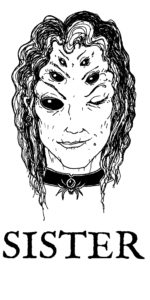
      A Spiderling called Sister, by Bearded Devil
       
      • Lifespan: (same as a Human) up to 70 years. When a Spiderling dies they turn to webs, which ultimately crumble to dust. Their souls return to the ether web, to be cleansed of any memory, and return as a new egg to start a new life.
      • Size: average at about 5 feet tall.
      • Sample Names: Abby, Nicolette, Clothilde, Laetitia, Victoire.
      • Features:
        • Many eyes, and with that many inputs it makes it hard to process. Therefore a Spiderling's sight is considerably weak. Huge bottom, due to their spider heritage.
        • Spiderlings are linked to each other by the ether web, and can connect telepathically to one another. They share this trait as a hive-mind.
        • Their sex is fluid and non-binary. A Spiderling can change it at a thought's notice to whatever suits their wishes.

      4 - 5 Dwarf


      Dwarf by Sergio Artigas
      • Lifespan: on average a Dwarf lives up to 300 years. However, dying of old age is proof of a life not lived to the fullest, and is seen as a disgrace. Greybeard being a derogatory term. As a consequence war, drink and smoke are performed to the fullest.
      • Size: between 4 and 5 feet.
      • Sample Names: Ulrik, Harnof, Ilga, Olov, Alvin, Lizette.
      • Features:
        • Stocky and heavy, with secure footing.
        • Admirable resistance to drugs and narcotics, which they gladly put to the test at any chance.
        • Both male and female boast over their impressive beards. They might be hard to tell apart for Humans.

      6 - 8 Human


      Always ready! Humans by Charles Lin
      • Lifespan: on average a Human lives up to 70 years, although lifespan varies greatly.
      • Size: between 5 and 6 feet tall. But humans come in many shapes and forms.
      • Sample Names: (in the Maienstein region) Eros, Mendaur, Didako, Ibon, Antonia, Latxa.
      • Features:
        • Capable of the best and the worst, humans are versatile and work best in groups.
        • They helped consolidate Five Towns as a distant region of the Itean Empire, the obedient ants of Nemes, the Immortal Empress.

      9 - 10 Halfling


      Halfling by Cale Fortin
       
      • Lifespan: Halflings live up to around 90 years of age. Larger lifespan than Humans, but shorter than other Ancestries.
      • Size: average of about 3 feet, they are light and nimble. Obviously, hairy feet.
      • Sample Names: (same as Humans) family name is far more important: Ironheart, Buttercheeks, Potter, Nimblefeet, Jamjar.
      • Features:
        • Nimble and petite, halflings are in general weak due to their size.
        • Jovial and talkative. Surprisingly loud voice. The center of any party. Some find that amusing, others abrasive.
        • Halflings integrate well into any society and civilization, and are seen as a necessary boost to morale in any group, town, or city.

      11 - Molekin


      Molekin evolution, by Manuel Castañón

       
      • Lifespan: Molekin are short lived given their high mortality rate. Known to die at around 60 years on the rare instance of passing away of old age.
      • Size: between 2 and 4 feet tall, they average at around 3 feet.
      • Sample Names: Snot, Pimple, Cough, Stye, Rash.
      • Features:
        • Stronger than their size might suggest.
        • Molekin live in large communities underground (tunnels, abandoned dungeons, mines, etc.), where they spread like vermin. Isolation breaks their minds.
        • Molekin gladly take leftover jobs of any society: tending to sewers, cleaning stables or piling fertilizers. Hard time integrating.

      12 - Jotun


      Jotun Hunter, by Mark Hretskyi


      • Lifespan: Jotuns live exactly 100 years. As they age, their bodies start to slowly turn into stone. A Jotun dying of old age is a culmination of this process, and their statues are priced treasures within Jotun society.
      • Size: Jotuns have the blood of Giants flowing through their veins. Ancient unattended children of these behemoths, they boast a considerable size between 7 and 8 feet.
      • Sample Names: Boulder, Tusk, Flint, Drift, Mist, Steam. Jotuns take as name the first object they remember from their childhood.
      • Features:
        • Tall and strong, very acclimated to great heights.
        • Eyesight as good as an eagle's. Some have antlers, others don't.
        • Jotuns live in sparse remote areas, and are suspicious of intruders, strangers, and travelers alike.

      Tuesday, November 5, 2019

      Dead by Dawn - Review & Redux

      Dead by Dawn is a starting adventure for Shadow of the Demon Lord, meant for characters of level 0. This is a funnel. And an interesting one at that. I've played the adventure once, and ran it 3 times. As it is only 1.5$, I'd say for me it already paid for itself.

      The setup is extremely straightforward, and includes interesting mechanics to resolve the situation without the whole session turning into a drag-fest (not that kind though). But perhaps I'm getting ahead of myself.


      This thing contains spoilers (duh..), so if you're sensitive to them, stop reading and go do something else.


      Adventure Summary & Review

      "Even as the darkness from the Void casts its shadow across Urth, there are other dangers found lurking in the gloamings of the world. Some perils seek to entrap the innocent. Some are never defeated, their evils only delayed for a time. And at least one hungers for blood and meat to sustain its immortality. Tonight, this horror sets out to feed its vile hunger with fresh flesh."

      The Goathorne Inn stands on the side of a secluded road. It's close to a gloomy forest of your choice, and far enough of civilization to make it isolated. Characters arrive to the two story building and are met by 3 folks: a pair of dwarven ladies, retired mercenaries, Ananda and Gelda, and Bester, the helping boy. There's a 4th NPC in the building, a priest of the Old Faith named Horvath, who unbeknownst to the innkeepers, has been dead for about a day.

      Initially, players are allowed tavern shenanigans. They get to roleplay and get to know each other in character, and meet the two dwarven ladies and Bester. Heavy rain pours outside, so a warm drink & meal should sound like an inviting offer. Depending on your group they might get really into it, but you have a way to move the action forward with the dinner.

      The Good

      • Premise of the adventure is simple but brilliant. There's a sense of dread, and a ticking clock that can explode in the PCs faces at any moment. An adventure has to feel like a tray full of half-empty drinks currently balance by a pin needle. Then you throw the players on top, and see where all falls.
      • Space is confined, very much so! There's an inn. That's it. Makes the situation nice and controllable. As written though, it could use some expanding. More to it later on.
      • Splitting the resolution into 2-hour chunks is also clever and elegant, to keep the session in order and things moving forward. This mechanic is nice, although the "Siege Encounters" table on pg 6 can use some adjusting depending on the number of PCs in the inn.

      The Bad

      • There are three NPCs in this adventure: Ananda and Gelda (the dwarven ladies), and Bester (the helping boy). As presented, the NPCs are a tad dull, and the most you get is a silly gimmick of how the dwarves pronounce the name of their inn. This needs spicing up! We need a creepy and crazy NPC that shills that "Dark Souls/Warhammer Fantasy" feel to the players.
      • This adventure features exactly one adventure, the Goathorne Inn. There's no map. Art is expensive, I get it. But this is a massive missed opportunity, and should have been included as part of the adventure. There are detailed descriptions, but the less I have to parse from text, the better.
      • No mechanic for escaping the inn. It should be virtually impossible to do so during the outbreak, but I would've appreciated some commentary or mechanics on how to handle clever and innovative players that decide to make a run for it.
      • Useless roll are not good adventure design. Repeat with me: do not make your players roll if there are no strict consequences. From the text: " Once he is dispatched, have bitten characters make Strength challenge rolls with 1 bane. There’s no effect on a failure or a success, other than to raise the tension". Not my cup of tea.
      • Layout and art minor issues here and there. The "Unexpected Events" table is split in two pages. The 2 pieces of art are... not indicative at all from other SotDL products. I don't want to dunk on the artist. But it just doesn't fit the theme and adventure.
      Don't be fooled by the dominance of negative points. I tend to find flaws and not praise the good! This is a very good adventure.

      Some Hacks - The Redux


      Let's face it... your dwarven ladies need beards
      The PDF where I write notes and attempt to enhance the adventure
      1. Spice up the NPCs in "Getting Started".
        • Remove Bester (as presented, he's quite dull), and add Old Sam (Commoner), that's an old wicked human (sounds like Old Man Touchy) who talks about "certain Doom if you succumb to weakness and violence", "you reek of Corruption". He's creepy, but harmless. The dwarven ladies let him stay in the common room and serve him a pot of stew a day in exchange to tending their beasts at the stable.
        • Make Ananda very troubled and mentally scarred. That Insanity 3 has to shine.
        • Make Gelda behave like a sergeant, giving orders and cussing like a sailor.
      2. In "Death For Dinner" have a clear trigger for what makes Horvath rise, deliver the line and attack. As presented, it seems he acts arbitrarily (after the PCs have explored the room a bit). Make it be anyone touching the corpse for examination of the cause of death will awaken Horvath.
      3. Create a random table to spice up where the bodies break in in the "Encounter Resolution Phase". Locations in the first floor to be weighed in more heavily, but cellar and second floor should be a possibility.
      4. Complicate the plot by adding interesting things inside the inn (after the outbreak). This point ties to #1 above.
        • The adventure is vague as to what there is on the inn. I would suggest adding a couple of cooking knifes (daggers), 2 barrels of ale, 2 casks of oil (used for lamps and cooking), a shovel, and 50 ft of rope.
        • Let's convert the Zombie Apocalypse of this adventure into Zombie Apocalypse + Hateful Eight. This serves two purposes: first, to allow the introduction of new (hidden) characters that players can pick up when theirs ultimately succumb, and secondly, to force more tension within the inn (by the way of conflict).
        • The same day of Horvath's demise, the following happened: there is an Orc cook lady called Pliers. She was getting some action in bed with Ananda, ultimately cheating on Gelda. Unbeknownst to them, they get peeped by naughty boy Bester (a la Game of Thrones). Pliers notices this last time mid-act, and kills him out of rage in a moment of stupidity (instead of buying off the boy's silence, which was the sensible thing to do). Gelda now did find out, subdued the Orc employee, and was in the middle of torturing her in the cellar (with the help of her old mercenary "tools"), and removed her right eye. And then the PCs arrive.
        • Above circumstances forced Gelda to move the ale barrels to a spare room on the 2nd story of the inn. This room is locked, and additional to the 4 suites described in the original text. We place the rest of equipment I described in the first point here as well.
      5. The conclusion to Dead by Dawn as presented happens under two circumstances: PCs either survive till dawn (5 x 2-hour shifts during the night), or their faces get eaten by a swarm of undead creatures. But we all know groups will attempt to get creative. Especially when the odds are stacked against them, and things are spiraling down.
        • Write down possible escape routes and plans during the night. It should be tough, but don't negate clever player ideas.
        • Some escape options might include:
          • Throw lit oil through a window, cause a fire, and flee through another window in the opposite direction.
          • Confront Gelda, take all food and supplies to the cellar, and start digging a tunnel.
          • Cover yourself in guts and feces, and try if you are undetected by the walking corpses.
          • ... etcetera

      Conclusion

      Midnight snack, by Joao Fiuza

      If you are slightly interested in SotDL, buy this thing. And run it. In my opinion it's an excellent introductory adventure to Shadow of the Demon Lord. Better than the recommended Dark Deeds in Last Hope if your players prefer action-packed stuff (and they usually do), and you need less hand holding to run a game.